

Chosen by the wind
DoCLASSE needed a 15-second summer spot for its SARARI Air line. In a city fighting the heat, the wind can't settle anywhere until it finds her. Every frame is generated. The idea, the casting calls and the finish were done by hand.
- Client
- DoCLASSE
- Format
- 15-second TV commercial, 16:9
- Delivered
- ProRes master, July 2026
- Role
- Concept, script, storyboard, film direction
01 · The brief
Polished, even in summer
We reframed the brief around one image: a woman in DoCLASSE who stays put together in the heat, with the wind on her side. The single-minded message became 暑い日こそ、きちんと綺麗に。 (for women who stay polished, even in summer).
Scope came down to a single 15-second commercial, with no rollout across formats and no lookbook. The first round of feedback was specific: a stronger hook in the first five seconds, more drama in the wind and fabric, Tokyo compared against an overseas city, and a way to show her composure without leaning on her face.
02 · The idea
The wind chooses her
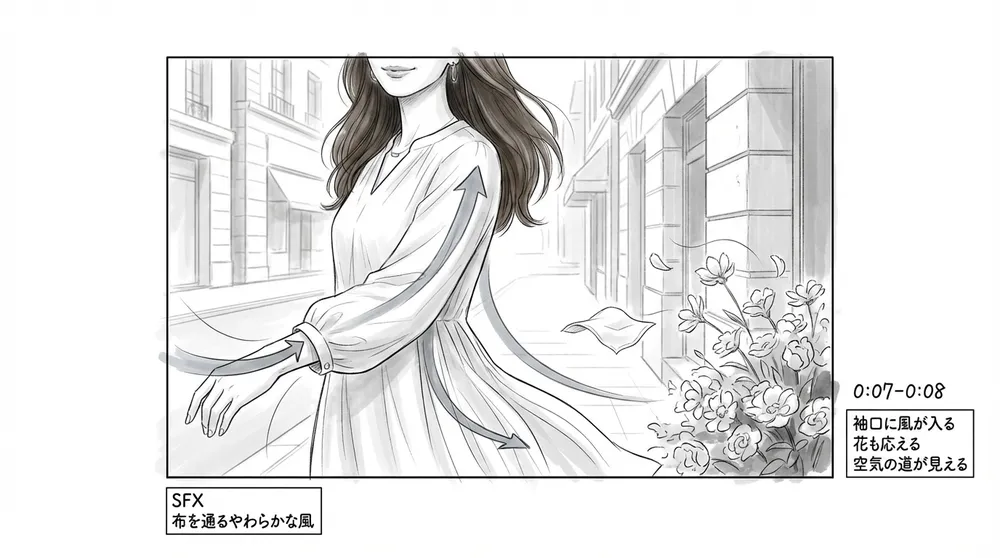
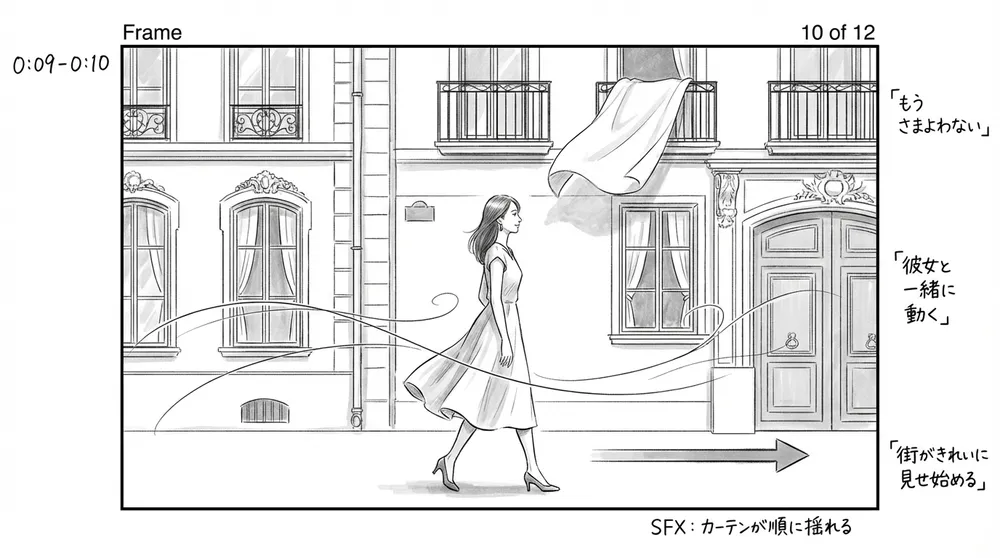
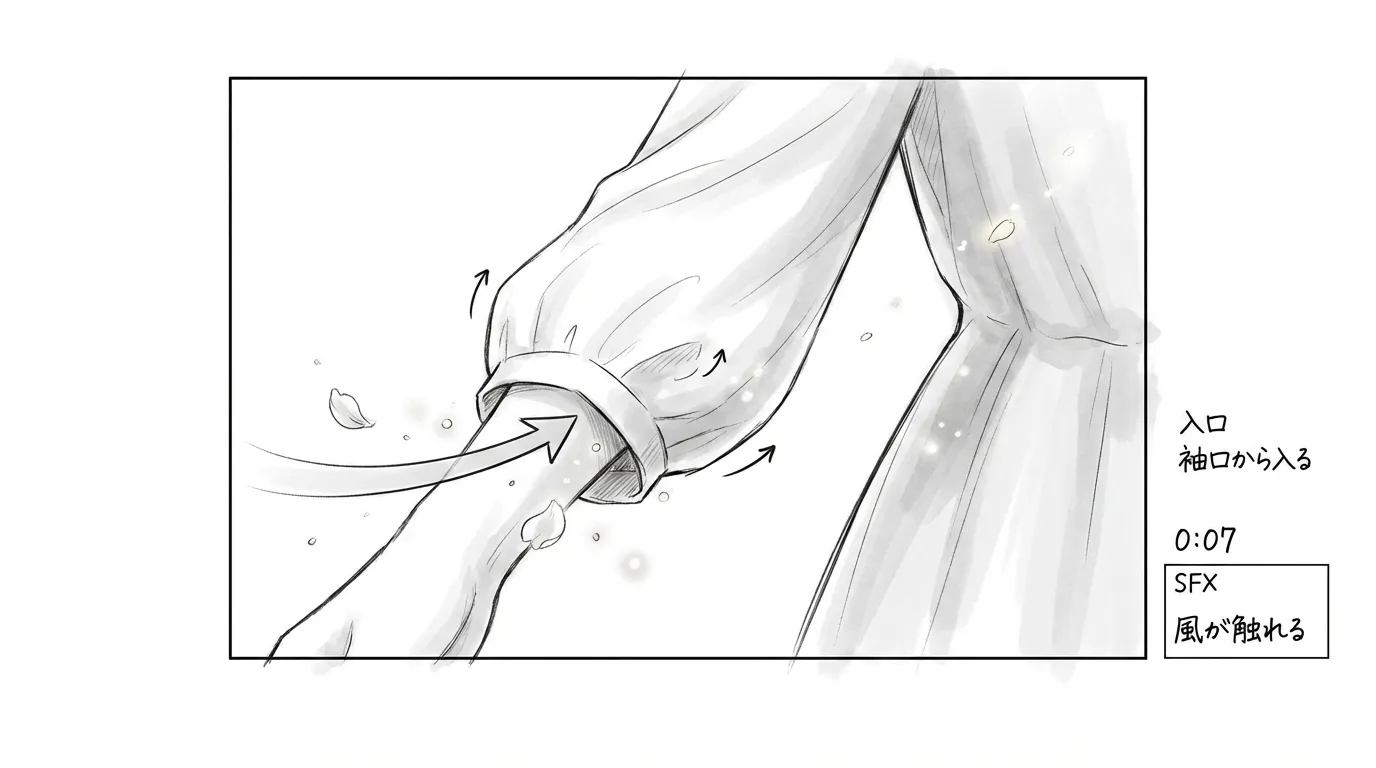
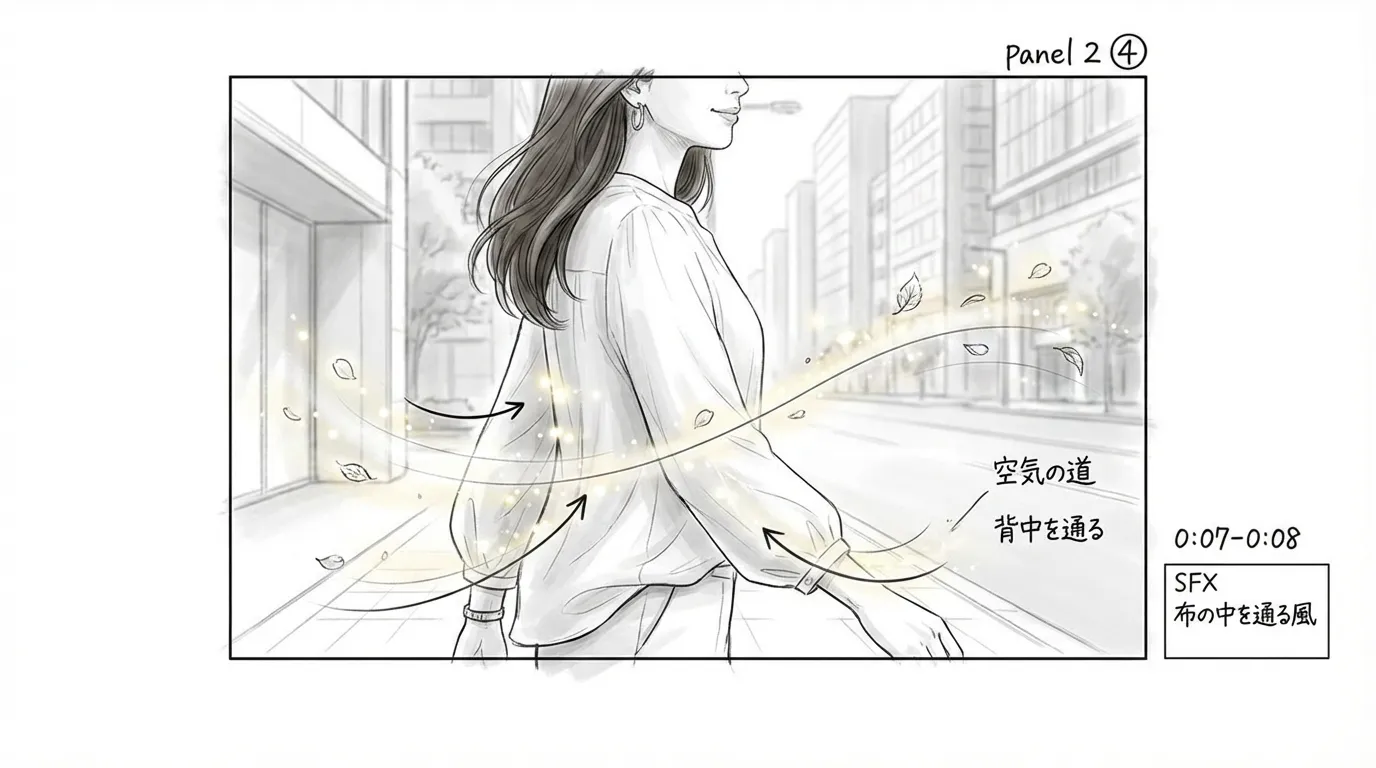
The idea is 風が、選ぶ。 (the wind chooses). On a high-summer day the wind moves through the city and nobody lets it stay. It brushes hair and gets brushed off. It slips into a collar and gets shut out. Then it finds one woman. It enters at her sleeve, crosses her back and settles inside the hem, and for a moment you can see the path of air inside the garment.
The script builds to one reveal: the wind wasn't looking for cool. It was looking for her ease.
Two routes carried the same idea. Tokyo, 静かな確信 (quiet confidence), was urban, precise and lower risk. Paris, どこまでも、涼しげに (cool wherever she goes), was more cinematic, with a higher ceiling. The final film took the Paris route.
03 · Storyboard
The camera is the wind
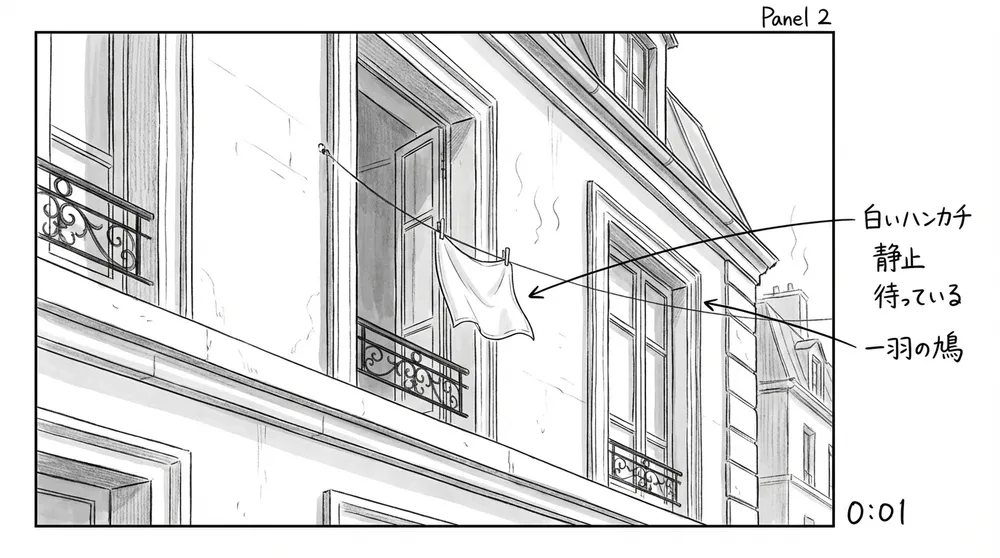
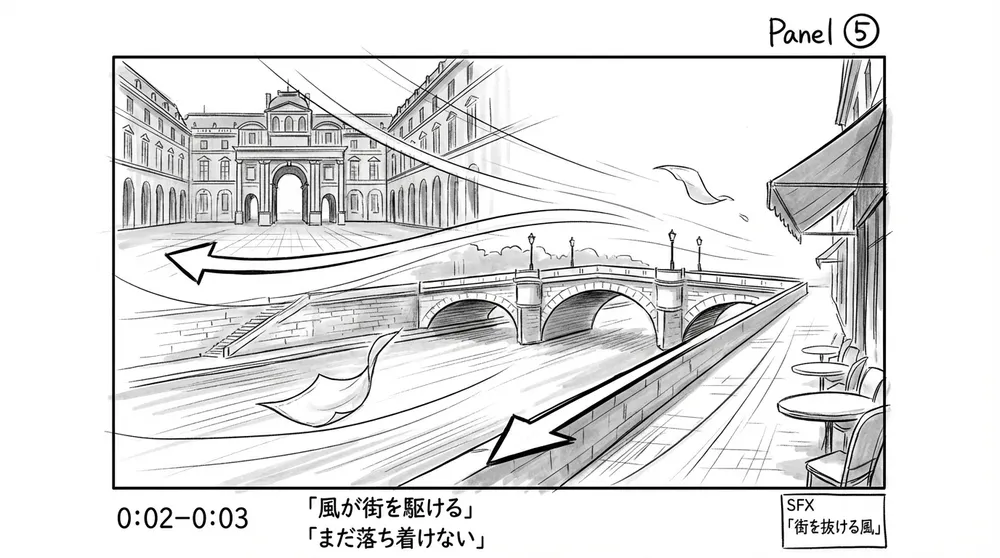
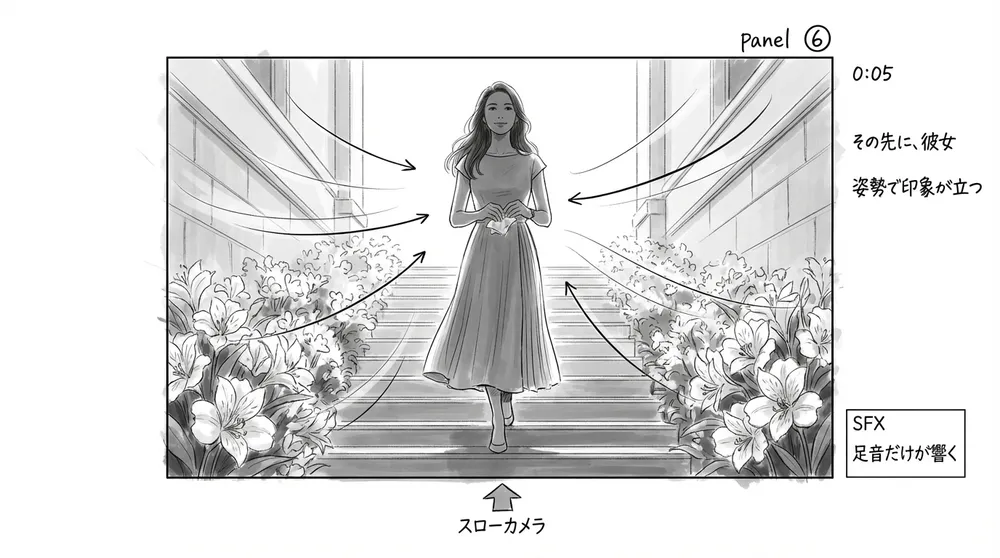
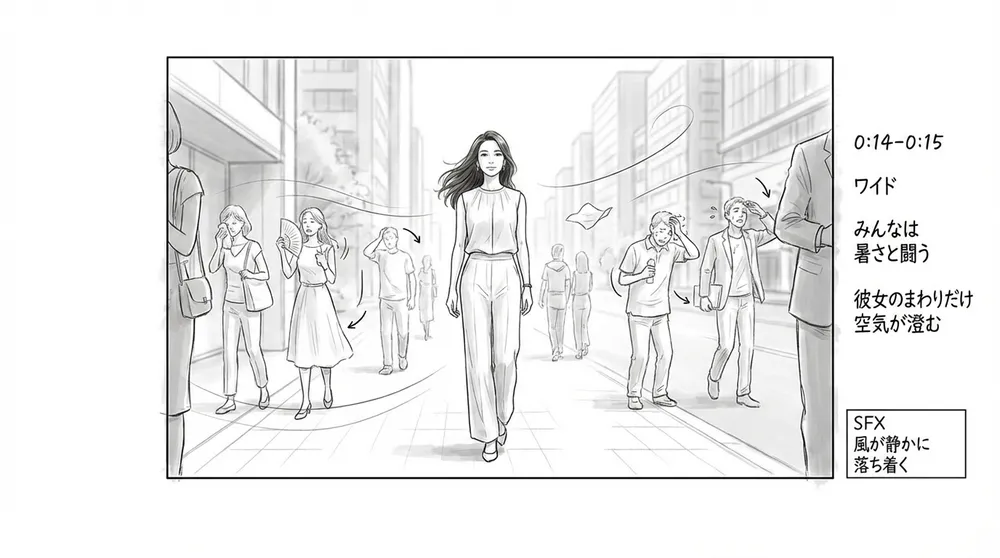
The treatment gave the camera one rule: it moves as the wind, or alongside it. Only three shots hold still, when she appears, when the product takes the wind and the final wide, so the stillness means something. She is always backlit and never lit from the front, and the color drifts from warm gold to cool blue across the fifteen seconds.
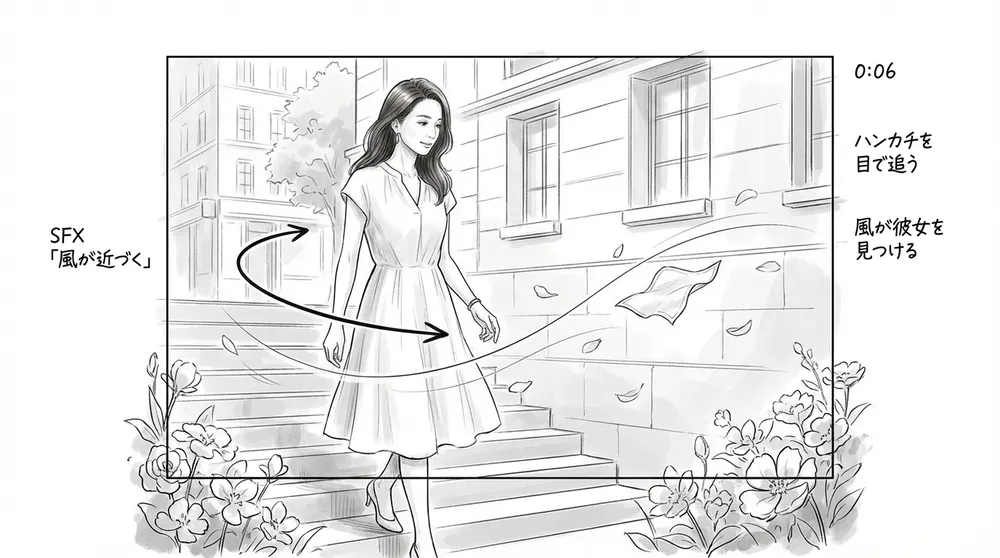
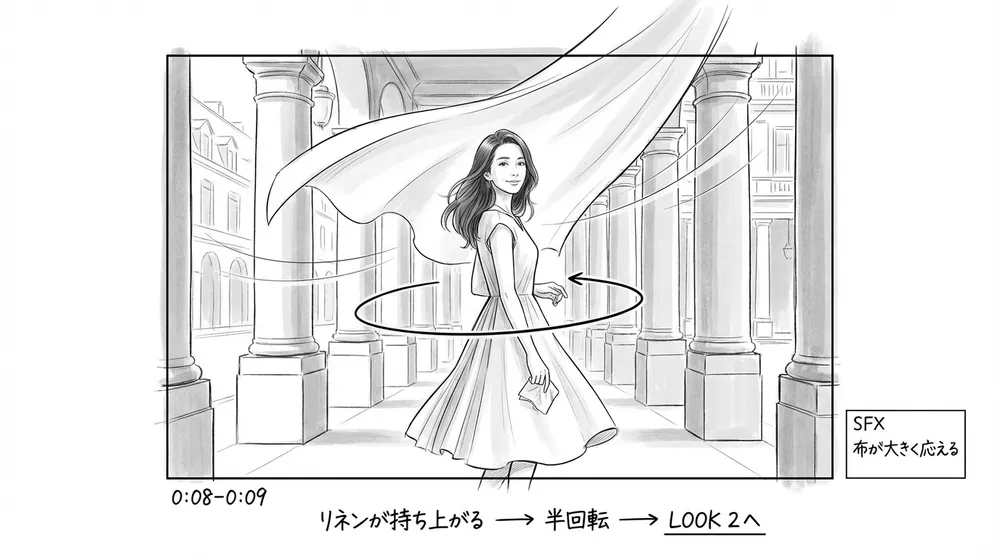
Look changes ride the wind too. A linen awning lifts and she half-turns into the next look. A handkerchief crosses frame and the outfit changes with it.
These are eight frames of the Paris route, in order. Beside each panel the sheet carries a short Japanese note on what the wind does, and a sound cue.
04 · Product moment
Making the air visible
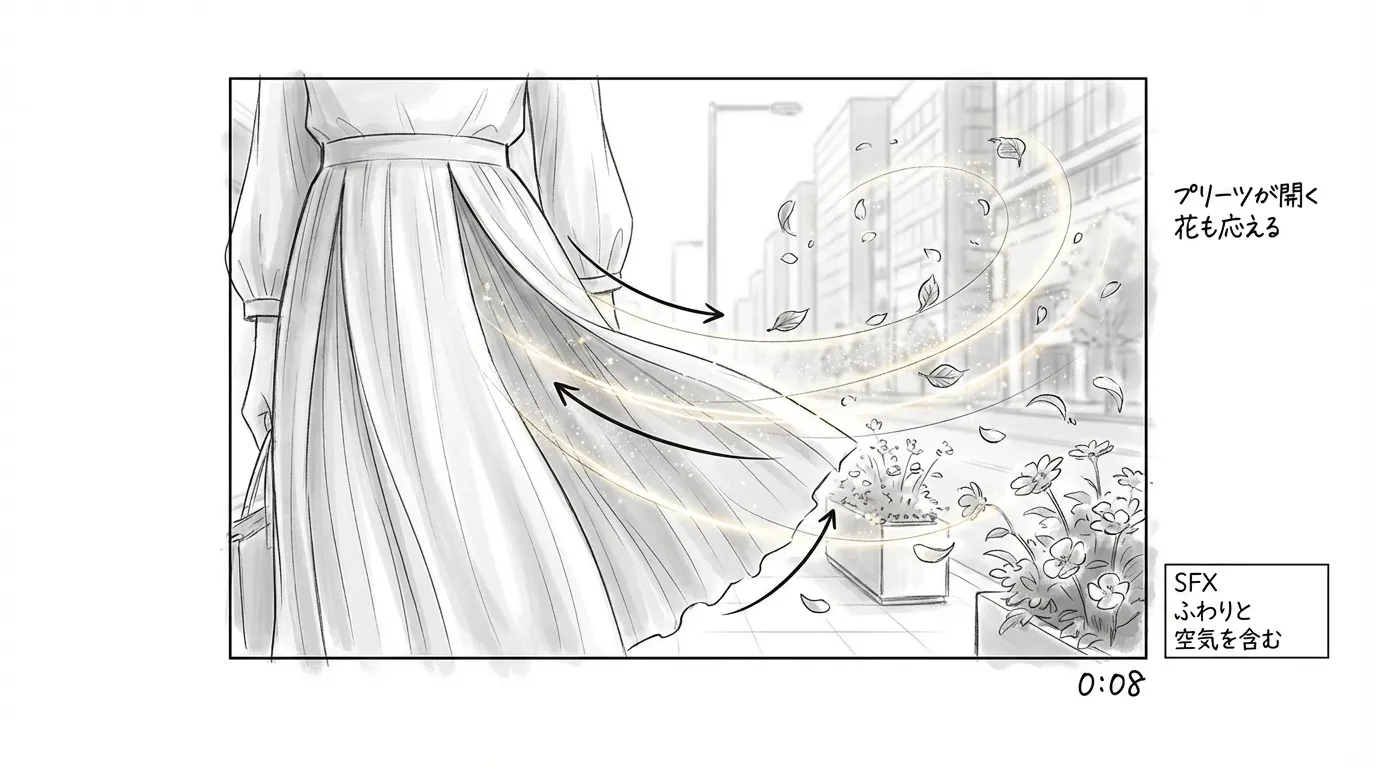
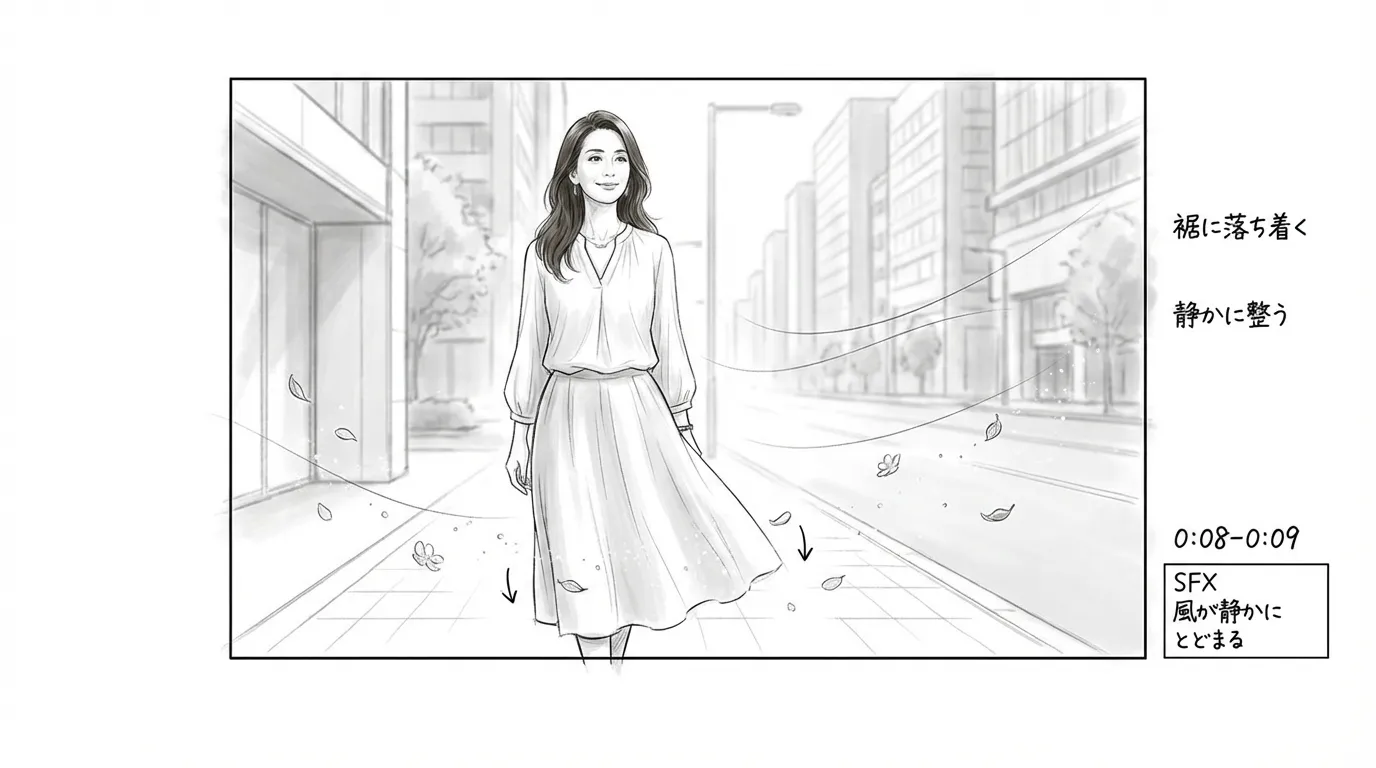
What the fabric does can't be seen, so the board breaks the product moment into four beats.
05 · Casting
Casting a model who doesn't exist
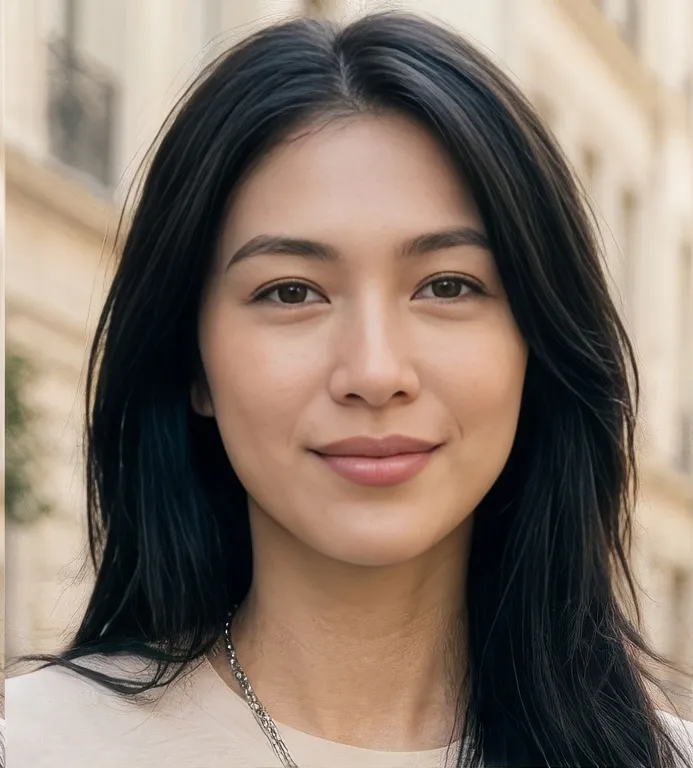
The casting brief asked for presence over prettiness: a woman who reads through posture, stride and silhouette, with intelligence before softness. The deck put it in one line. The wind does not choose the prettiest woman. It chooses the most composed one.
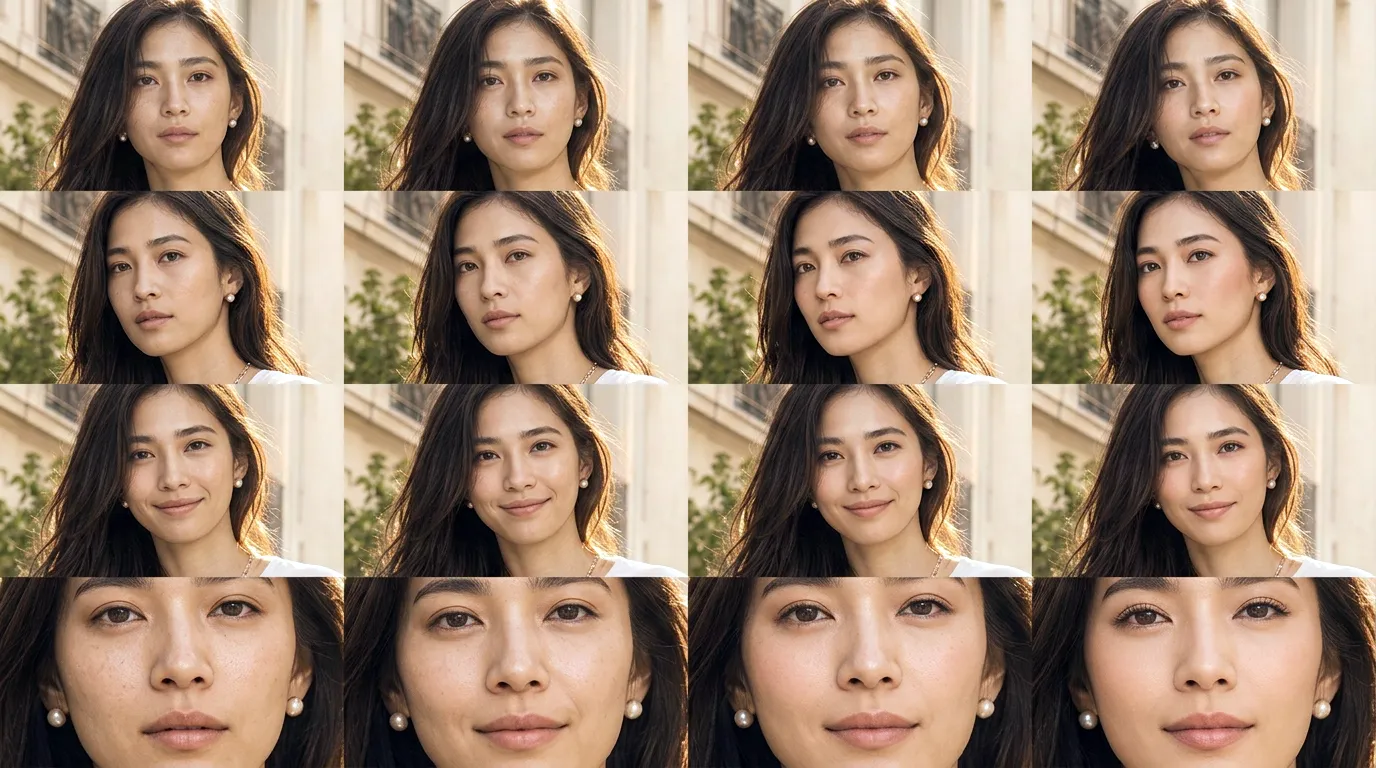
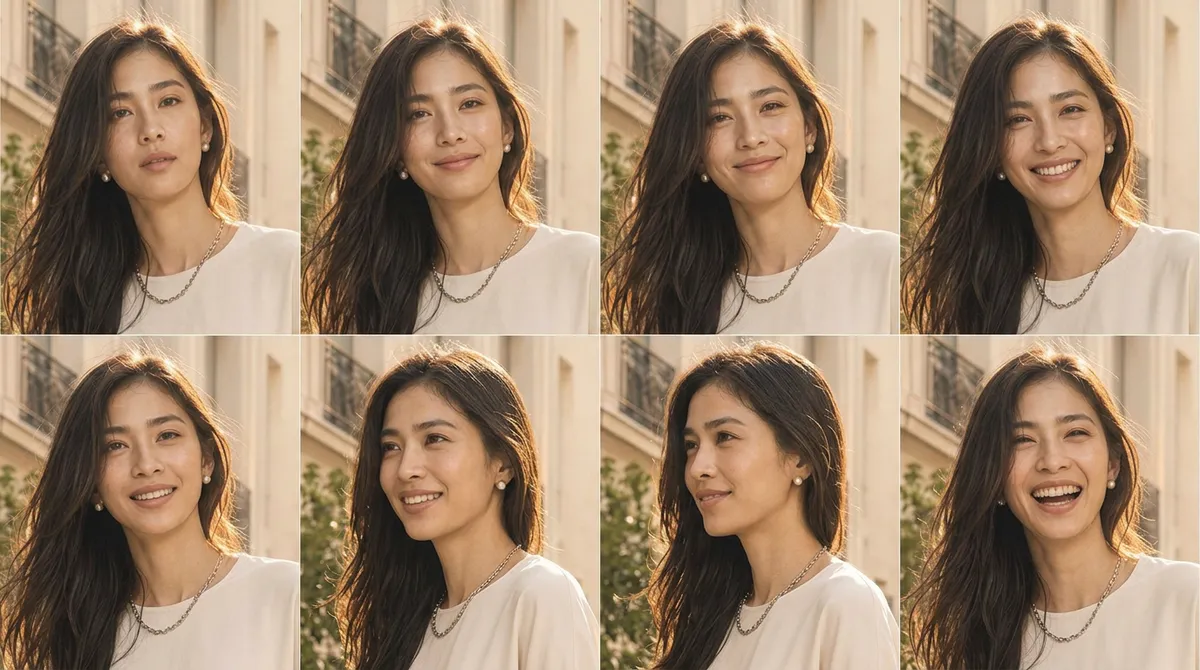
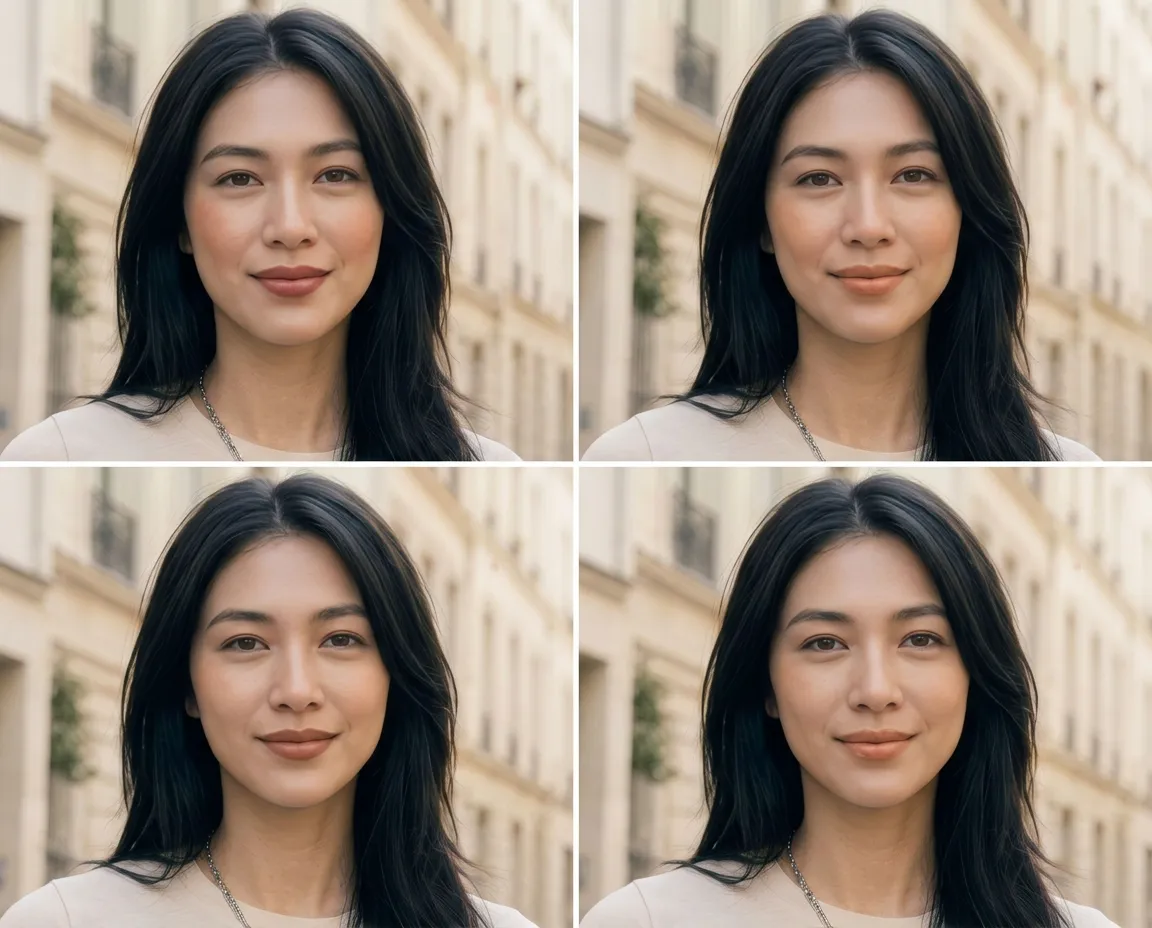
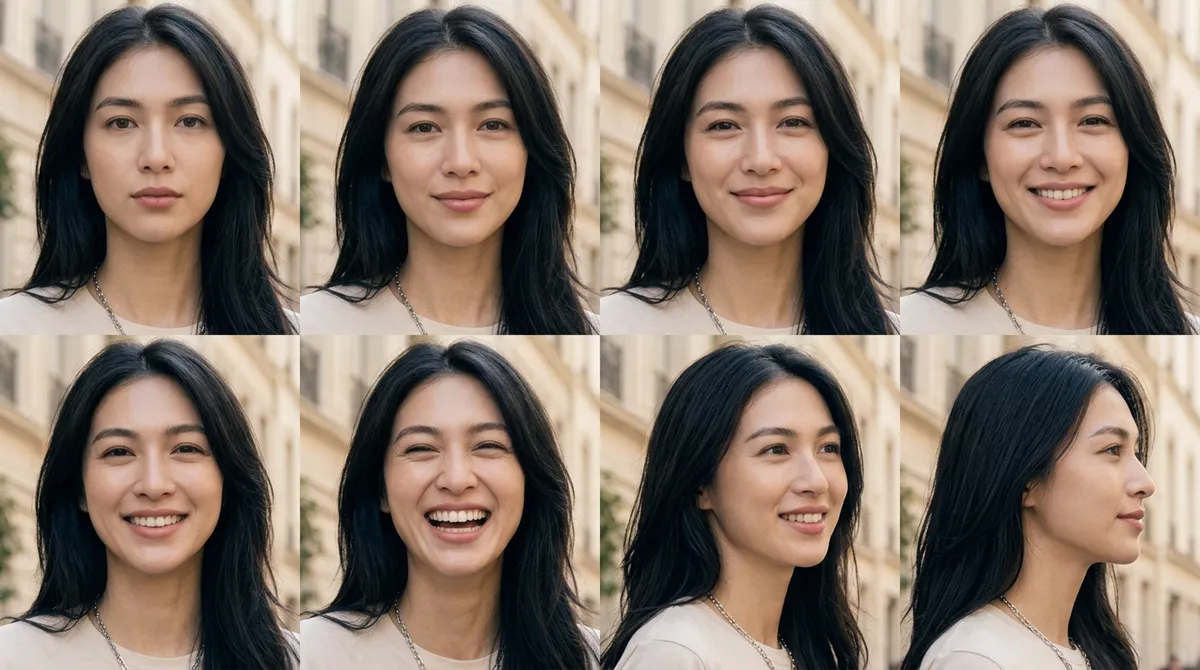
Generated people drift, so she was cast like a real model before anything moved. An early look test used a different woman. The face work then ran over two days, going by file dates. On 18 May the sheets show a brown-haired face, tested for makeup and expression and checked on a sixteen-frame approval sheet. On 19 May they switch to the black-haired woman who appears in the film, with a second round of expression tests and four makeup options side by side.
She wears the brand's own SARARI Air pieces, matched to the product references from the client.
06 · Movement
How the clothes move
A real model was filmed in each SARARI Air piece, walking, turning and handling a hat or a bag against a plain wall. The files are dated 27 April, the day of the final creative proposal. These movement studies show how each fabric falls and swings.
07 · The film
Balcony to street in one move
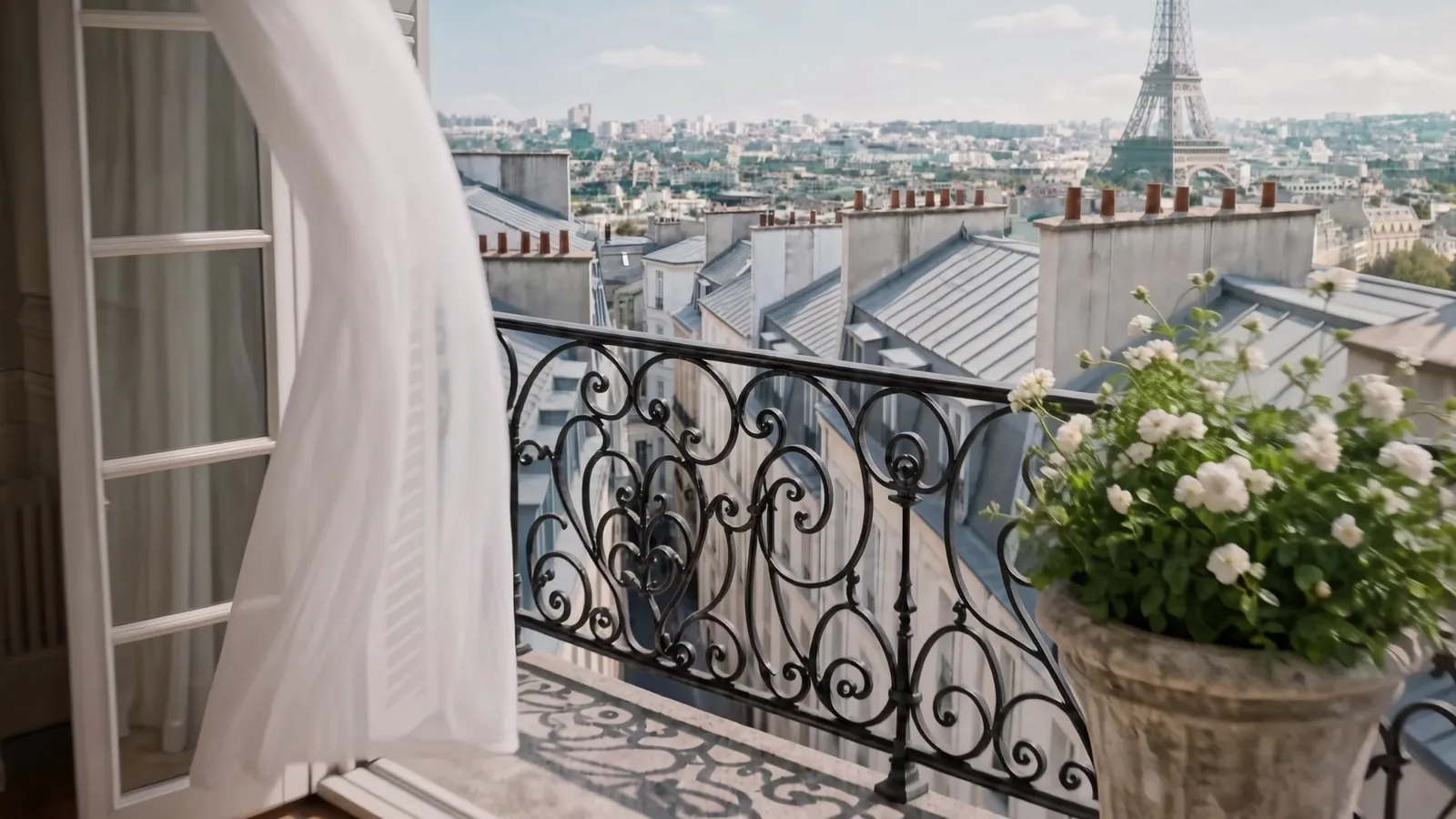
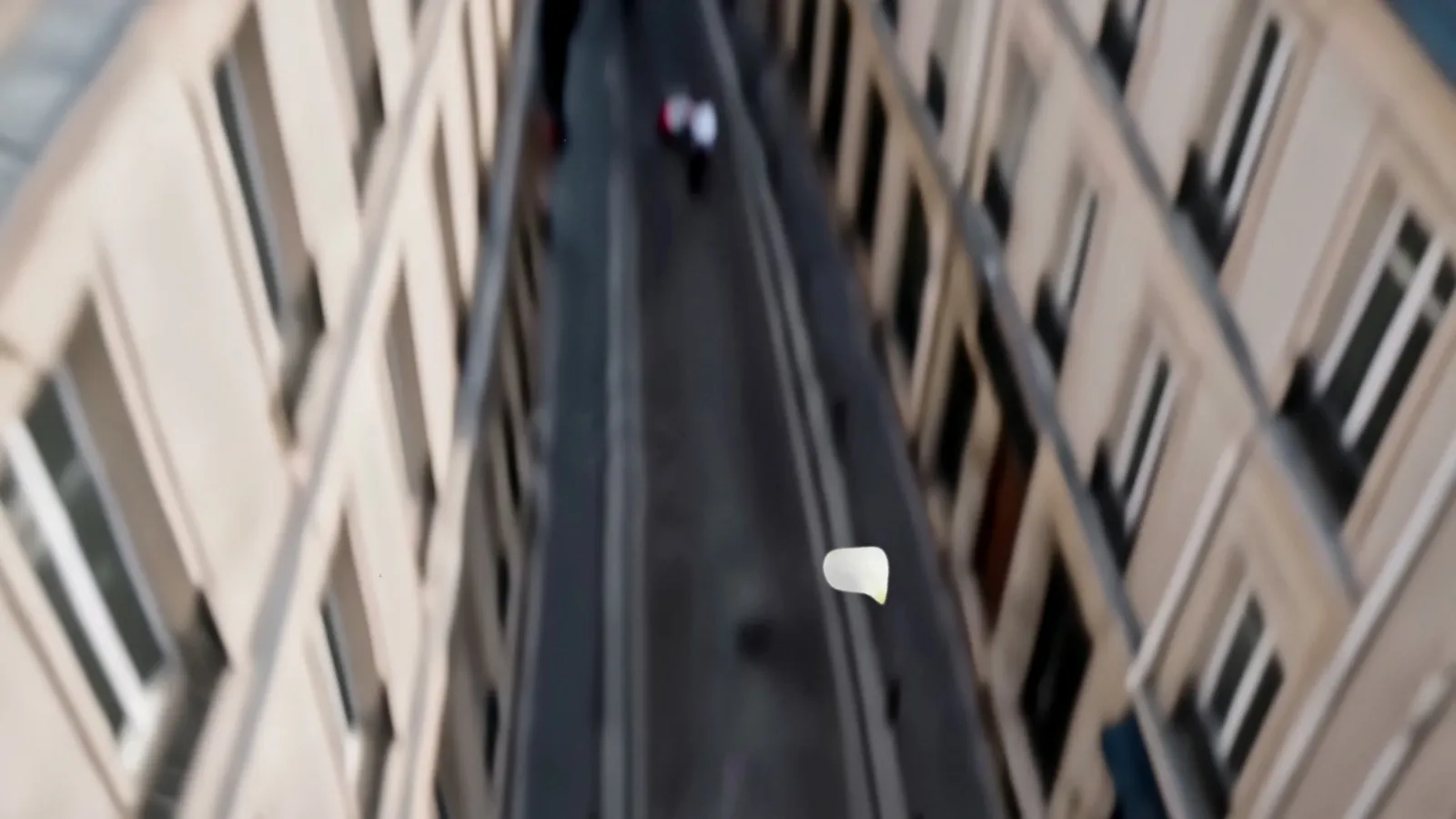
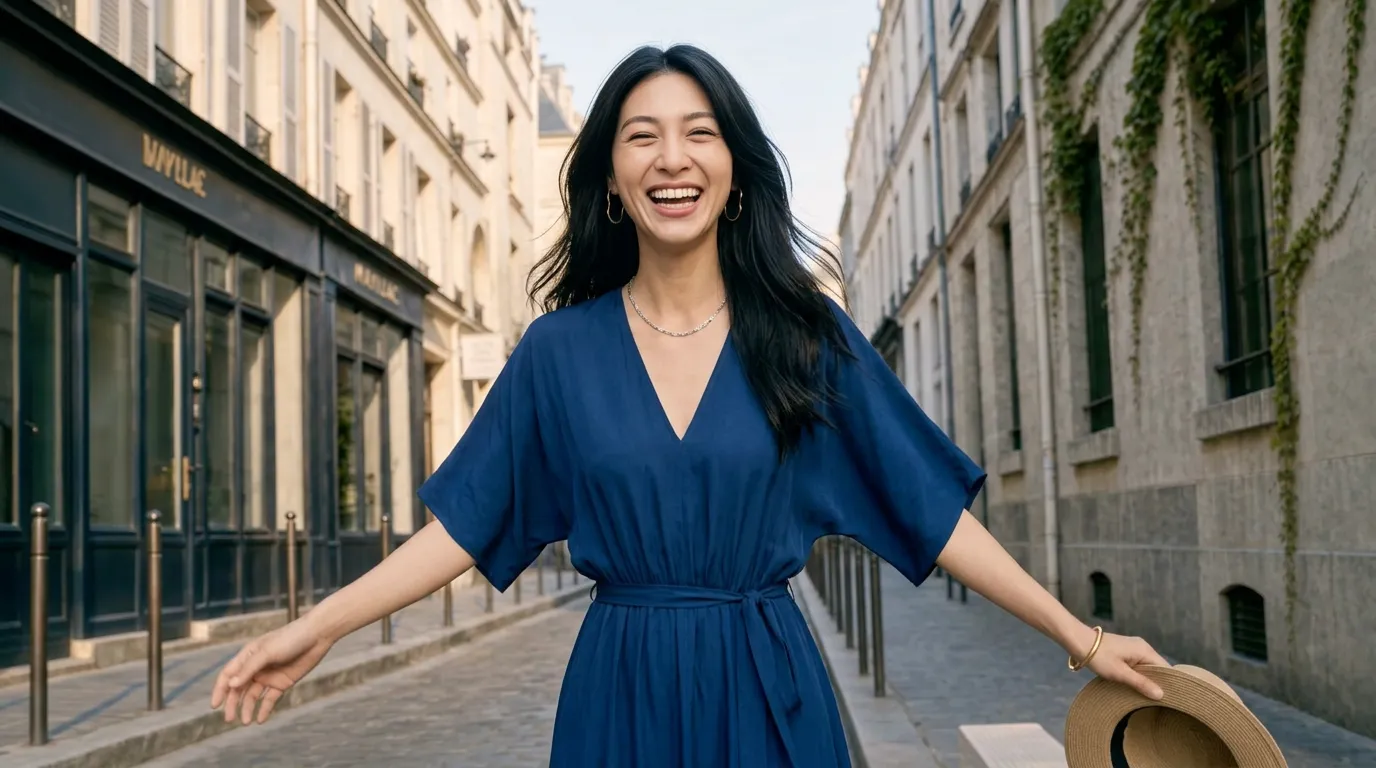
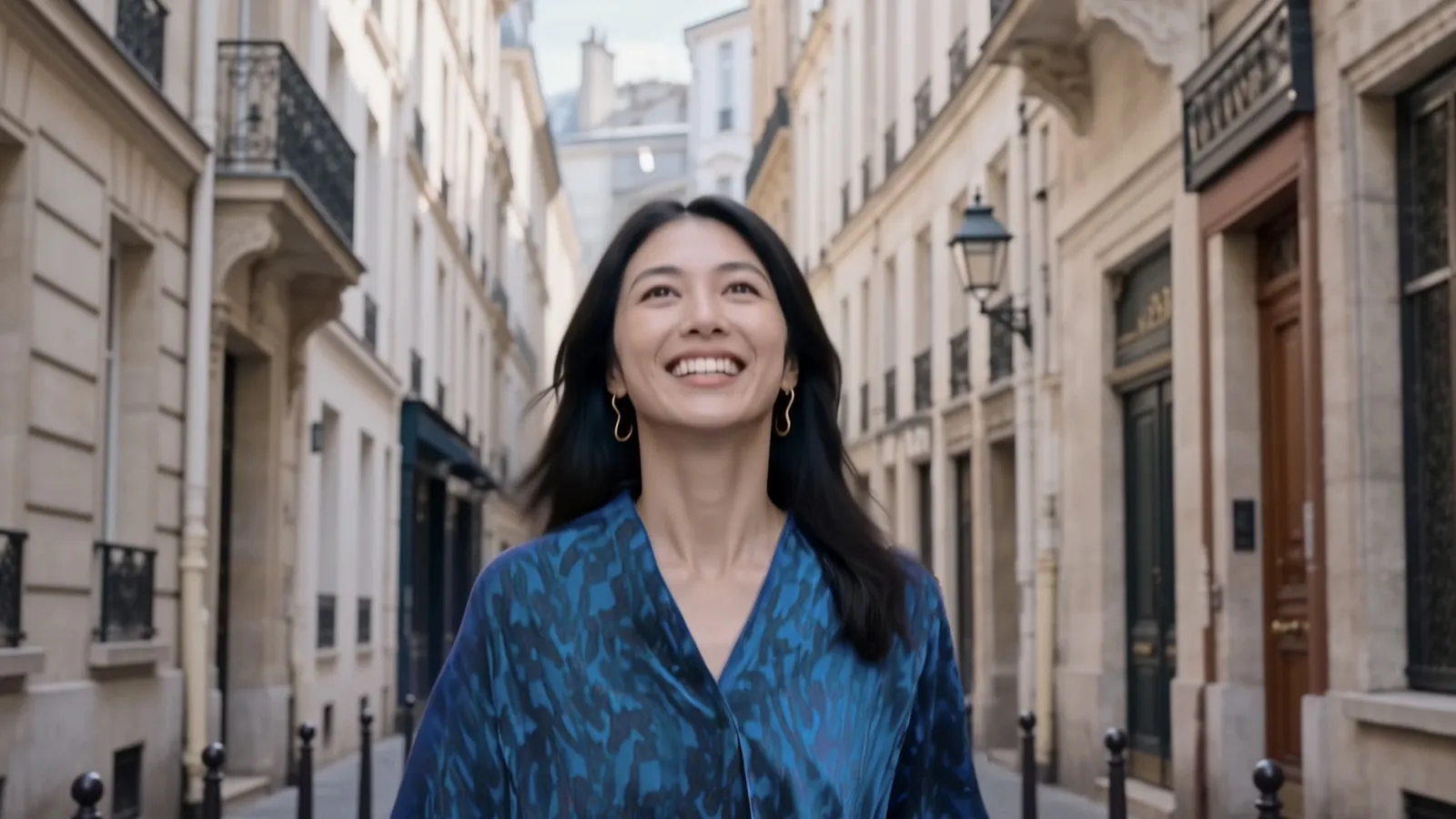
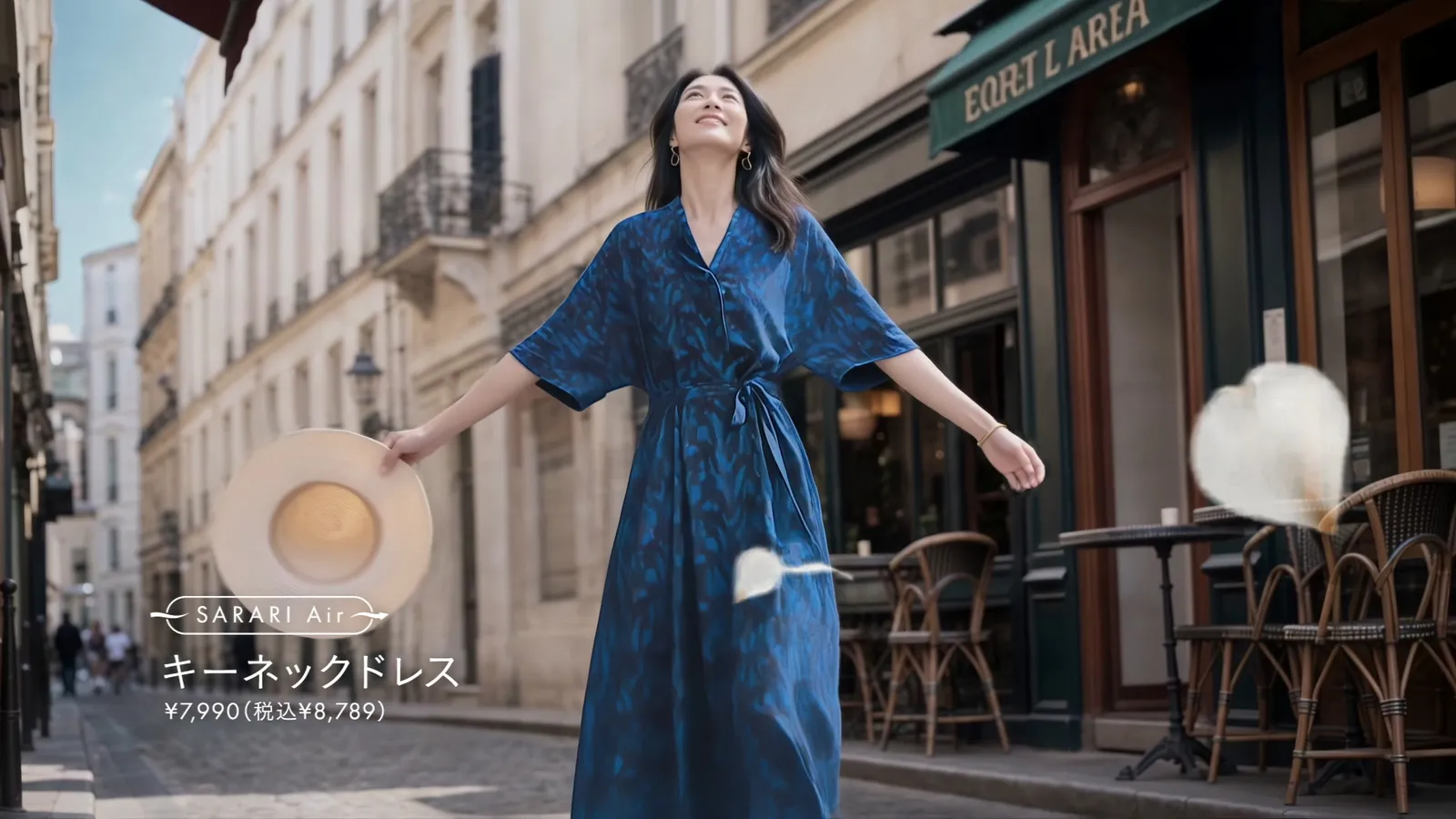
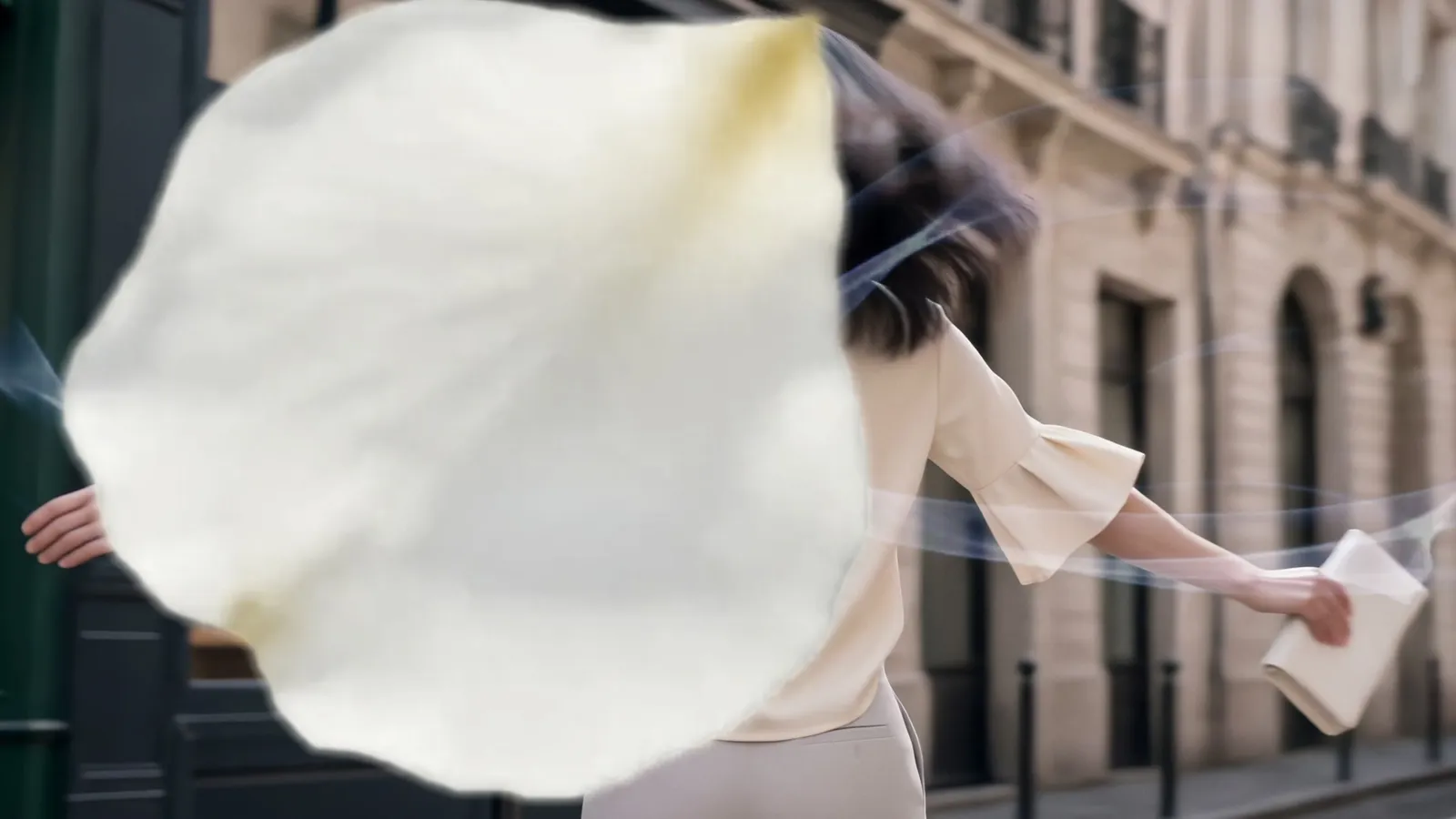
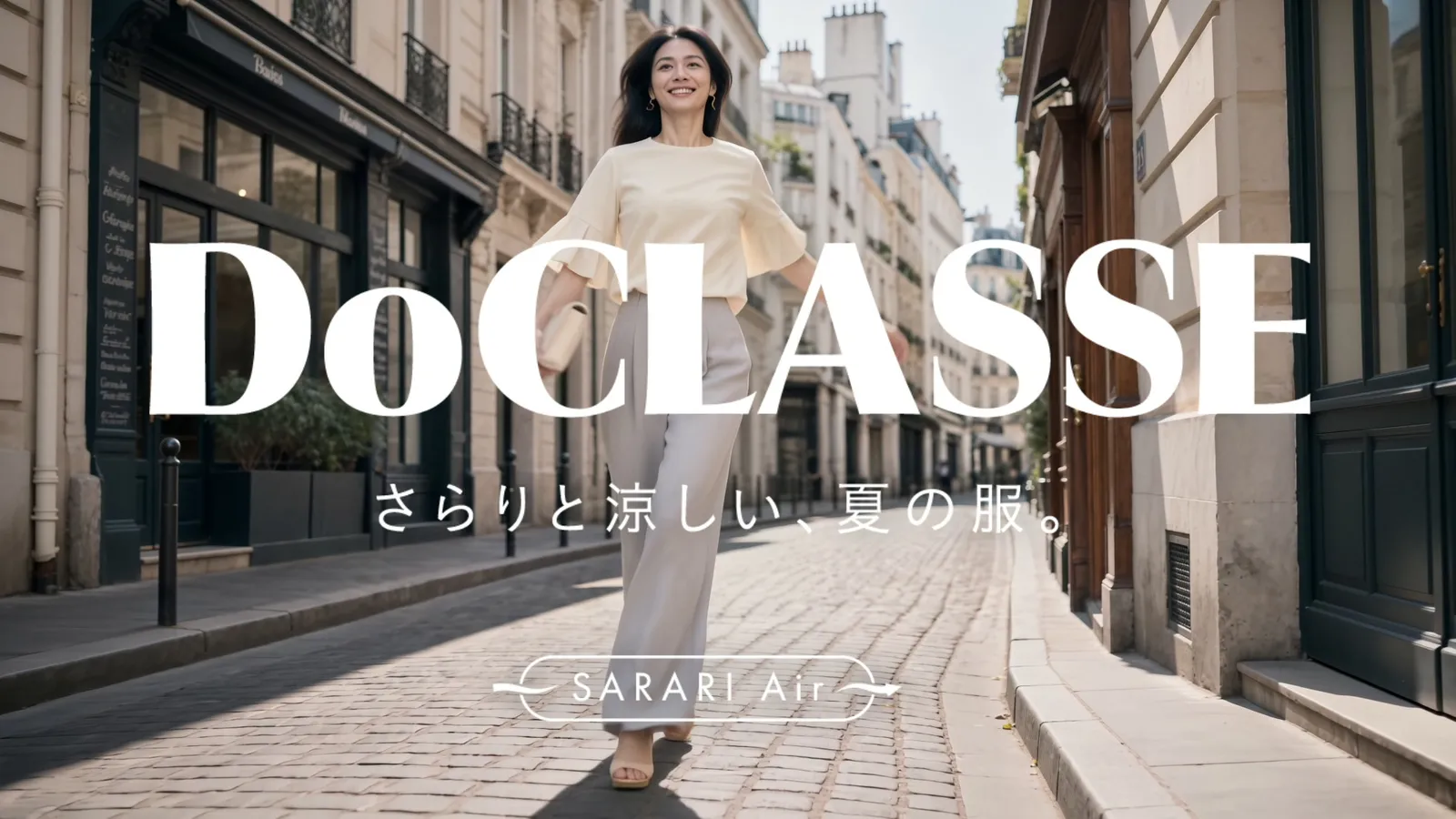
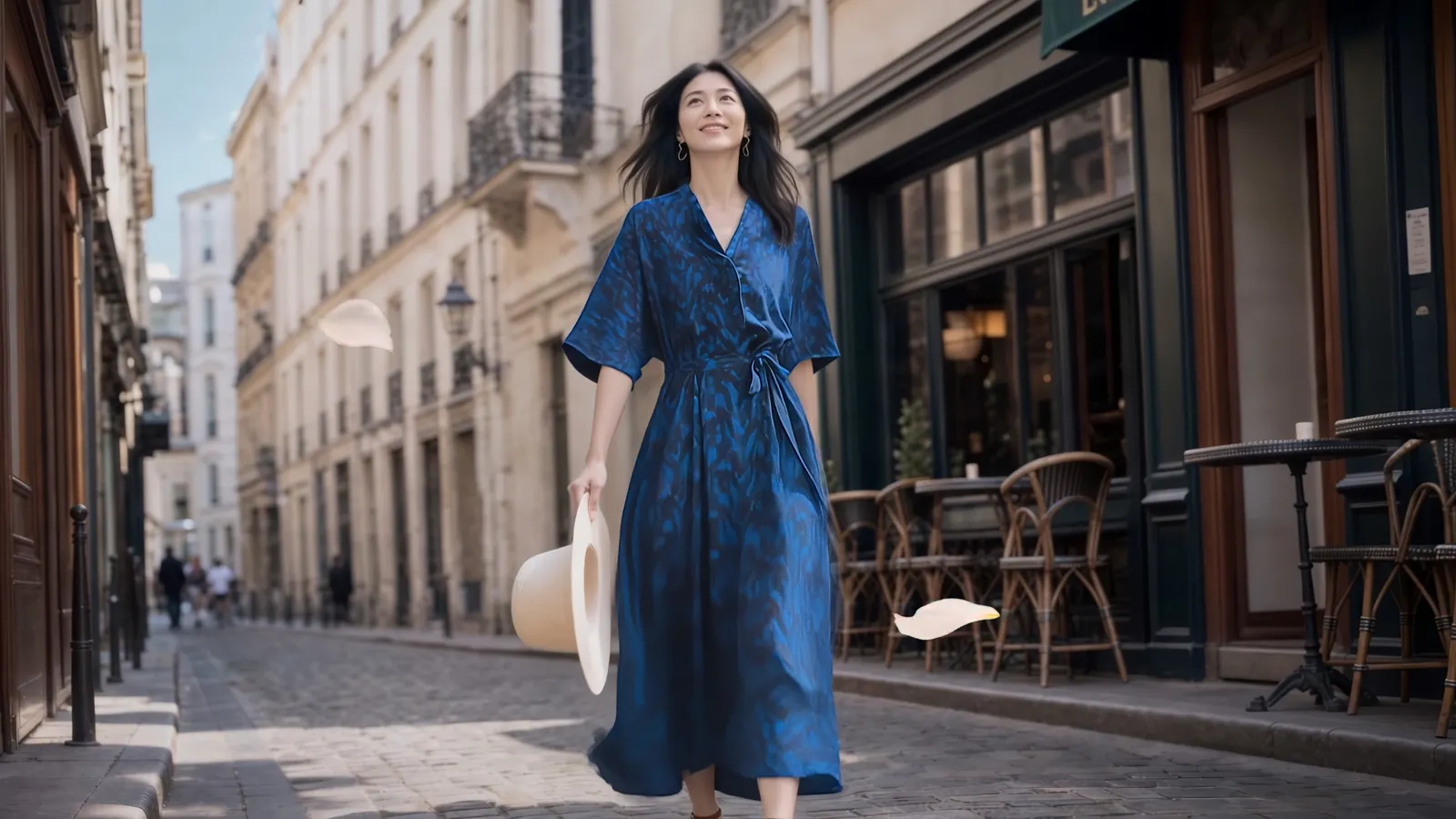
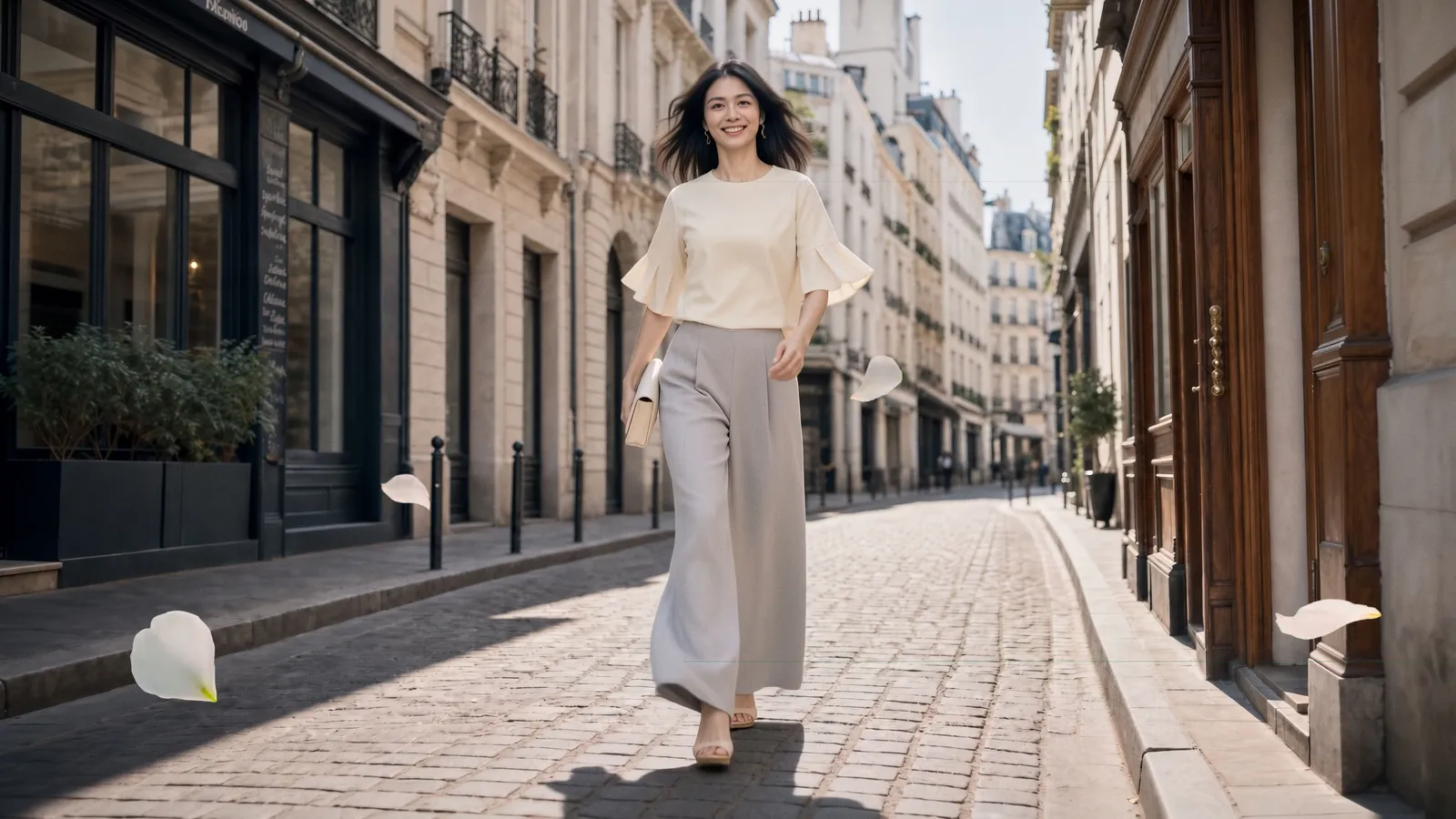
The spot opens on a Paris balcony as the wind pushes the curtain out, then drops down the face of the building to the street, where she is already walking. The plan had three looks. The final cut carries two, the blue key-neck dress and then the cream bell-sleeve blouse with wide pants, and a petal crossing the lens carries the change without stopping the motion.
Product names and prices come up as she passes, and the film ends on the DoCLASSE logo over the street.
08 · Versions
Four cuts, one moment
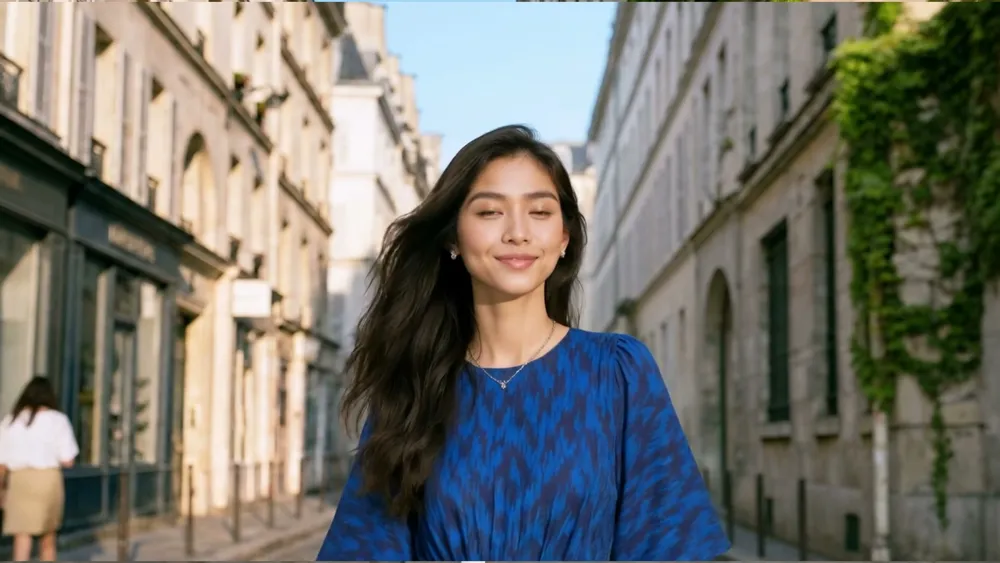
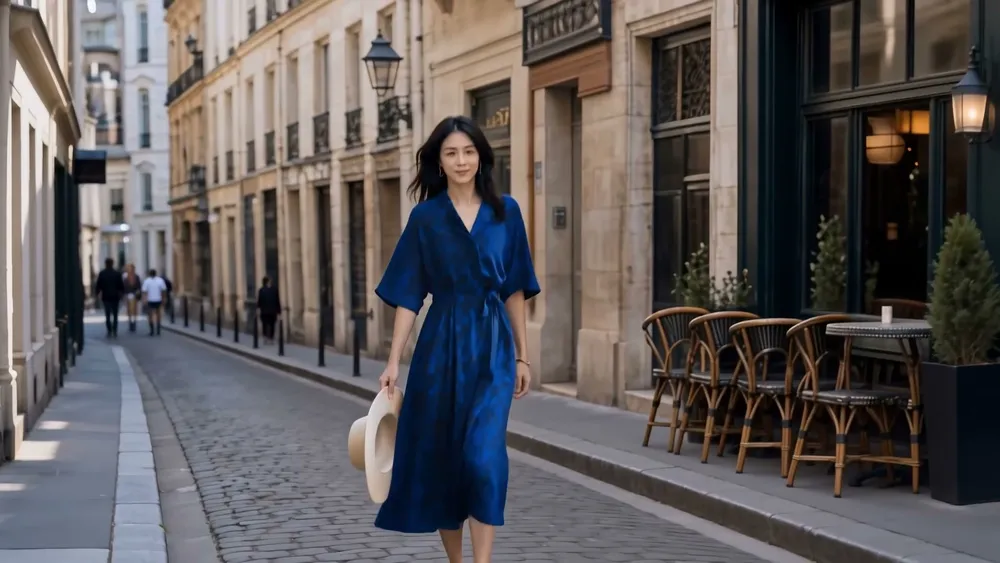
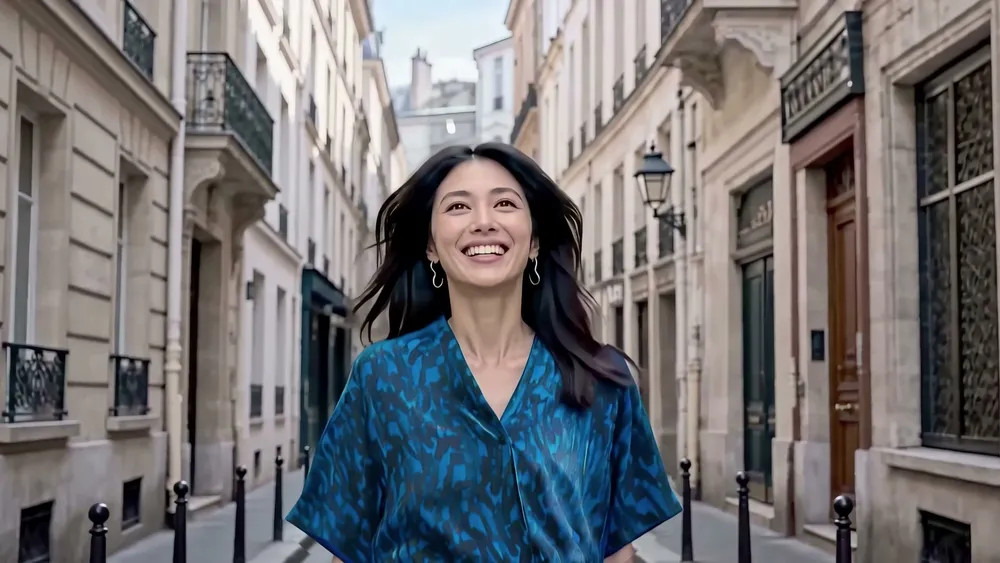
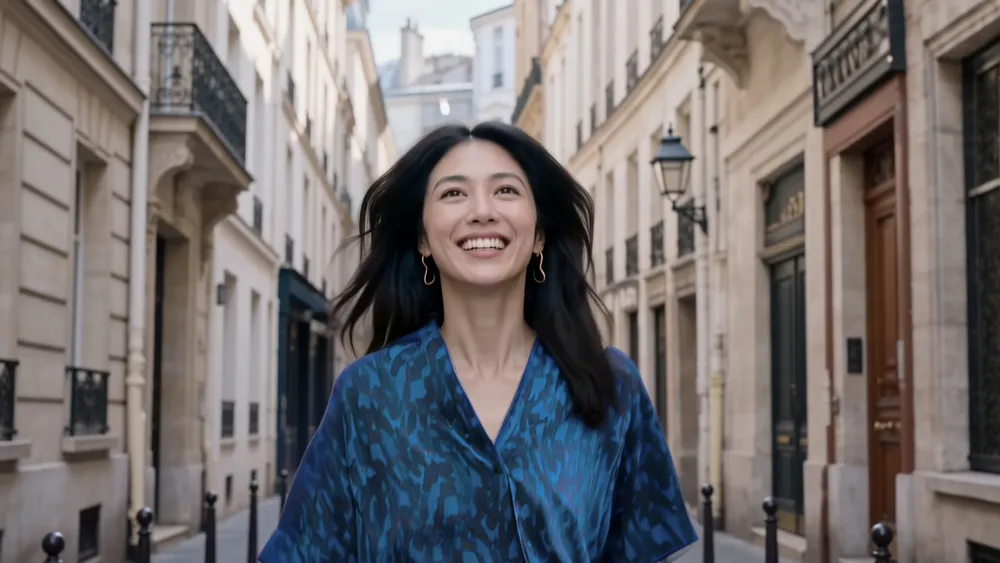
Each frame below is taken at 0:04, where she turns up in the street, from a different cut. The dates are the dates on the cut files.
The May cut was built from older clips, and it shows: a different woman, an ivy-covered lane and a blue outfit with puffed sleeves. By June the film had its Paris structure, with the balcony opening and the dive down to the street, and a plainer blue dress. The 14 July cut has the patterned key-neck dress, a close portrait and the flower and wind effects. The 17 July master keeps that edit and reworks the opening drop and her arrival.
09 · Copy
Three lines for one feeling
Three main lines went to the client, each in its own tone. The deck led with the first. Wearing the wind is something she does, and the line carries past coolness to the composure behind it.
The film itself closes on a plainer line, さらりと涼しい、夏の服。 (light and cool, clothes for summer), set under the logo with the SARARI Air mark.
- 風を、纏う。(wear the wind): quiet confidence, with the sub line 涼しさの先にあったのは、彼女の余裕だった。 (past the coolness was her composure).
- さらりと、風格。(lightly, with stature): refined presence. More crafted, and more likely to split opinion.
- なびかない、私。(I don't sway): self-possession. Clear, but closer to a functional claim.
10 · Key visuals
Three stills from the same world
The key visuals come from the film's world: three scenes, each made in two versions, clean and with petals blowing through. The petals were generated on a green screen and composited by hand, in the stills and through the film.

11 · Sound
Quiet, but it stays with you
The client asked to compare a quiet track with something brighter. The proposal argued for the space between them: music that stays calm but sticks in the ear. The mix then went through several directions, Parisian, chic, upbeat and a club version among them, before the final mix was balanced against the picture in After Effects.
12 · Timeline
From the first proposal to the master
Everything here happened in 2026. The dates up to 27 April come from the schedule in the proposal deck. The rest are file dates from the project folder, which show when files were saved.
- 17 AprR1 creative proposalThe first round goes to DoCLASSE, with feedback planned for 17 and 18 April.
- 22 AprR2 treatment and storyboardPlanned for 15:00, with the two routes, Tokyo and Paris. Feedback planned for 23 April.
- 27 AprFinal creative proposalPlanned for 16:00, with client feedback and approval. The deck asked DoCLASSE for a casting and styling brief and for product images.
- 27 to 28 AprProduct references and first testsThe product files for the garments are dated 27 April, as is a generated Paris balcony test. The earliest music sketches are stamped 26 to 28 April.
- 18 to 19 MayCasting and makeupFiles dated 18 May test a brown-haired face. By 19 May the sheets move to the black-haired face in the film, with expression tests and four makeup options.
- 24 to 29 MayRaw cutsFiles dated 24 May include a raw cut of the film and Japanese voice tests. More cut versions follow through 29 May.
- 29 Jun to 6 JulMusic directionsDozens of generated music tracks and a set of sound effects are dated 29 June to 4 July, with a chic cue on 6 July.
- 5 to 7 JulPetal and wind effectsThe flower petal and wind effect clips are dated 5 to 7 July.
- 14 JulClose to finalThe cut with the flower and wind effects, music and sound is dated 14 July. The logo and price artwork is dated 10 and 13 July.
- 16 to 19 JulKey visualsThe three key visual scenes are dated 16 July, with RGB and CMYK versions on 17 July and the flower elements on 19 July.
- 17 JulThe masterThe 15-second master with music is dated 17 July.
13 · Division of labor
What the model did and what I did
All of the footage is generated. The concept, the casting, the direction, the compositing and the final calls were done by hand.
AI
- Generated the model, her face and her expressions.
- Generated Paris: the balcony, the facades, the cobbled street.
- Put the brand's clothes on a model who doesn't exist.
- Generated the petals on green and the early music sketches.
Hand
- Cast her, choosing the face and signing off makeup and expressions before any motion.
- Reframed the brief, wrote the concept and both routes, storyboarded the spot and directed the camera move from balcony to street.
- Ran quality control across the final output.
- Composited the petals, picked the music direction and finished the mix.