The Kaiju Who Couldn't Care Less
A vertical series where my Munchkin cat plays a 1970s movie monster, with side stories in five other TV formats. The footage comes from AI models. The episodes get built in After Effects, by hand.
- Format
- Vertical 9:16, five episodes plus side stories
- Look
- 1970s 16mm monster movie
- Cast
- One Munchkin cat and a generated world
- Tools
- Nano Banana Pro, Seedance, After Effects
01 · The idea
A monster who wants a nap
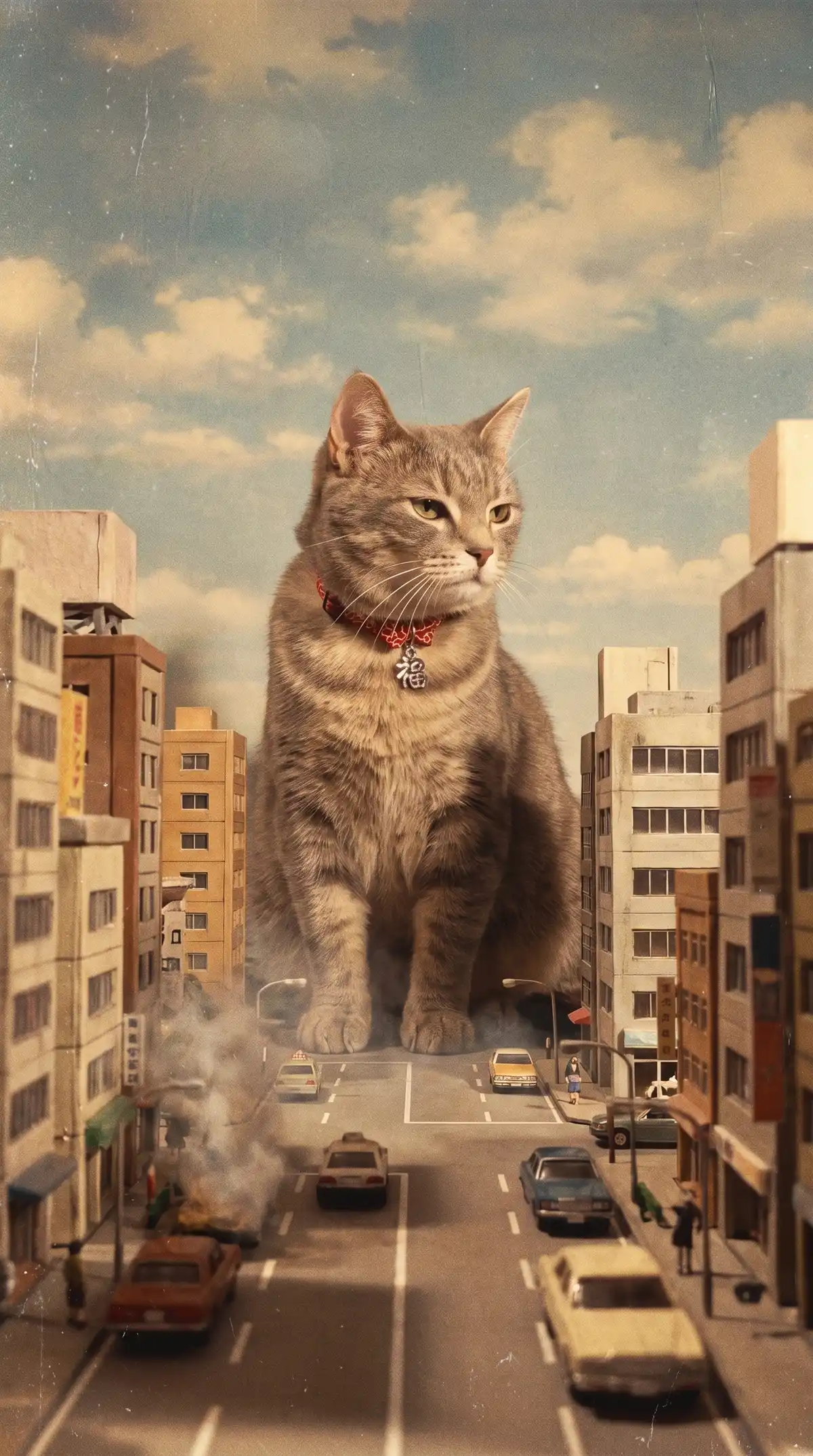
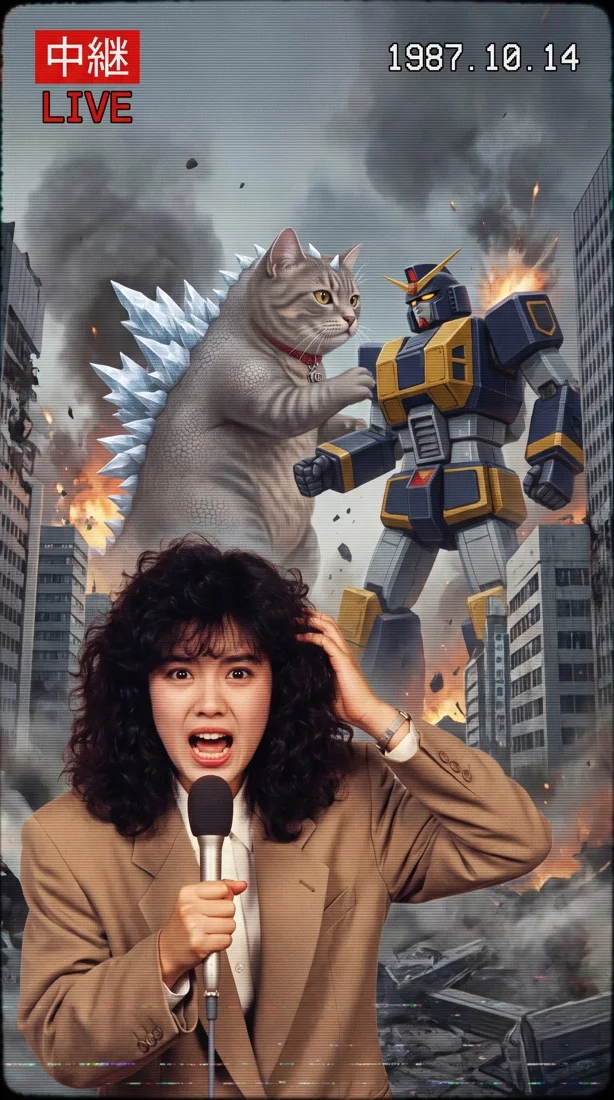
Riku is my Munchkin cat. In the series he plays Rikugon, a kaiju the size of a building who never does anything on purpose. A Defense Force treats him as an extinction-level threat, and a 1970s news crew covers it live. He wants somewhere warm to sleep.
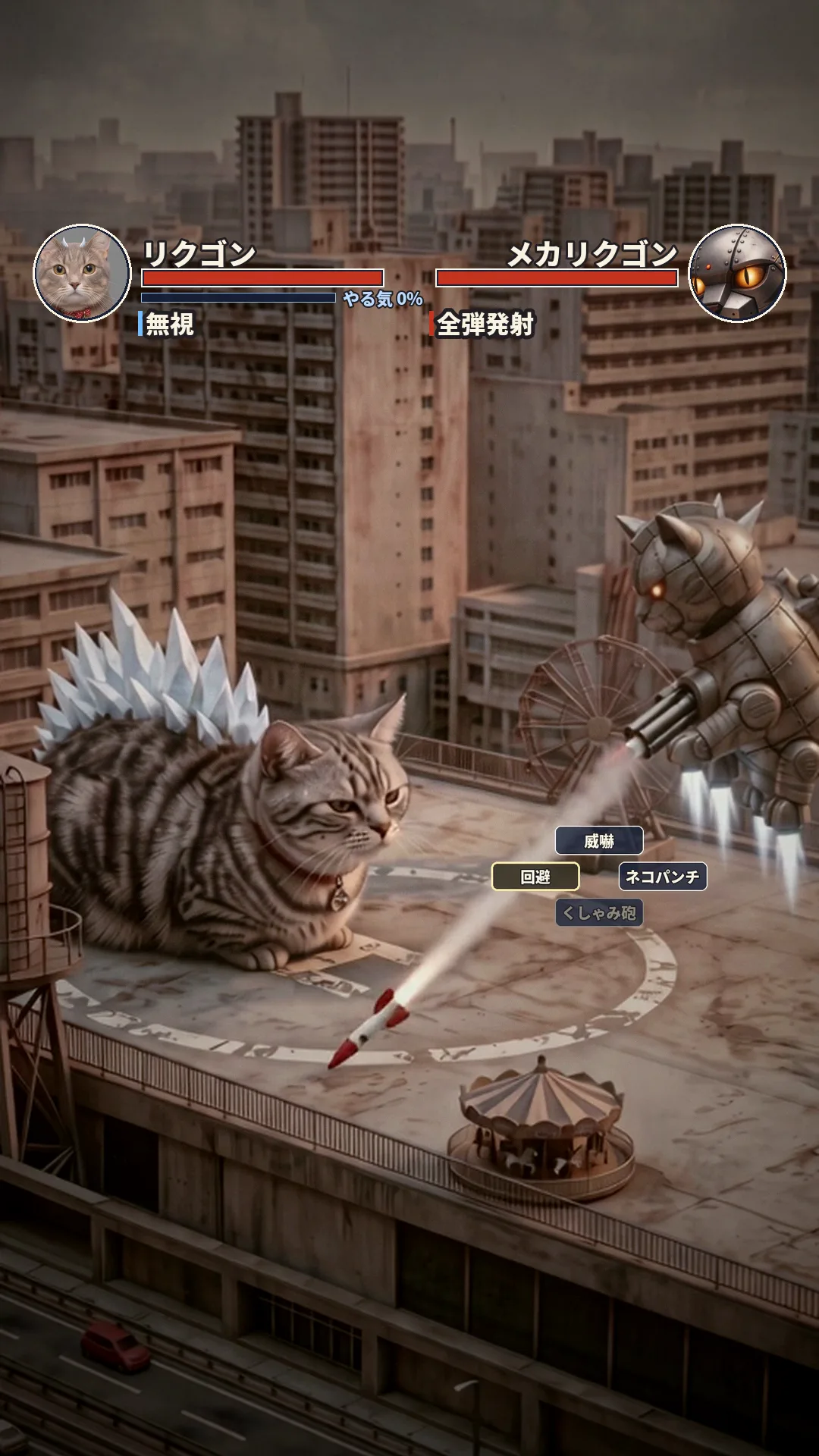
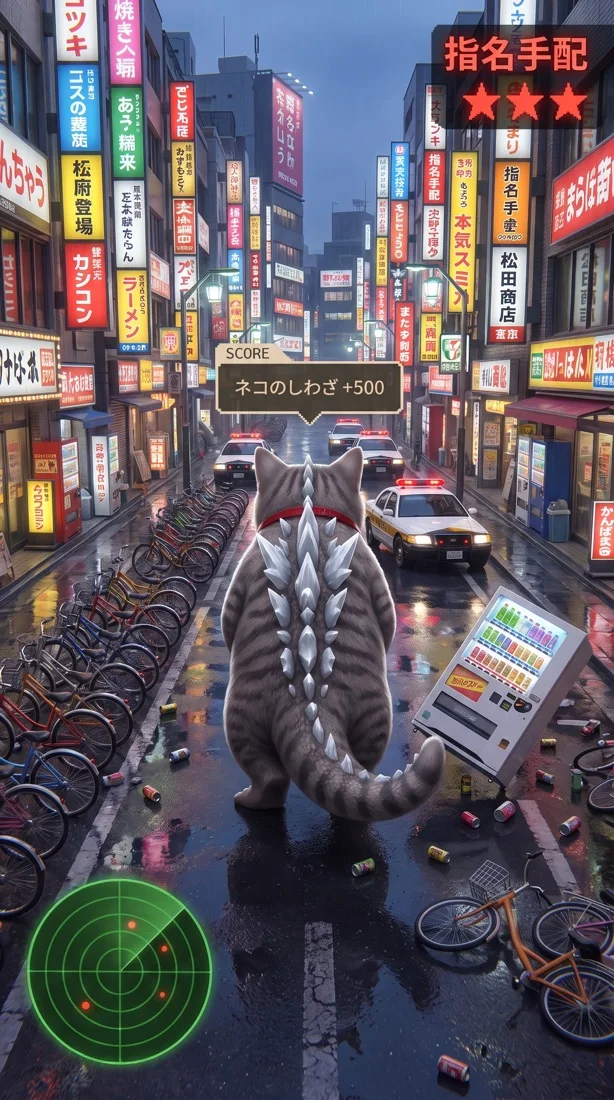
The engine is the distance between how seriously everyone takes him and how little he cares. The fights borrow from video games: name cards, combo counters, a result screen. You know the cat wins, so you stay to see how. Every episode ends back on the sofa, with Riku waking up and one object from the dream still in the room. The series never says it was a dream.
02 · The real cat
The cat behind the kaiju
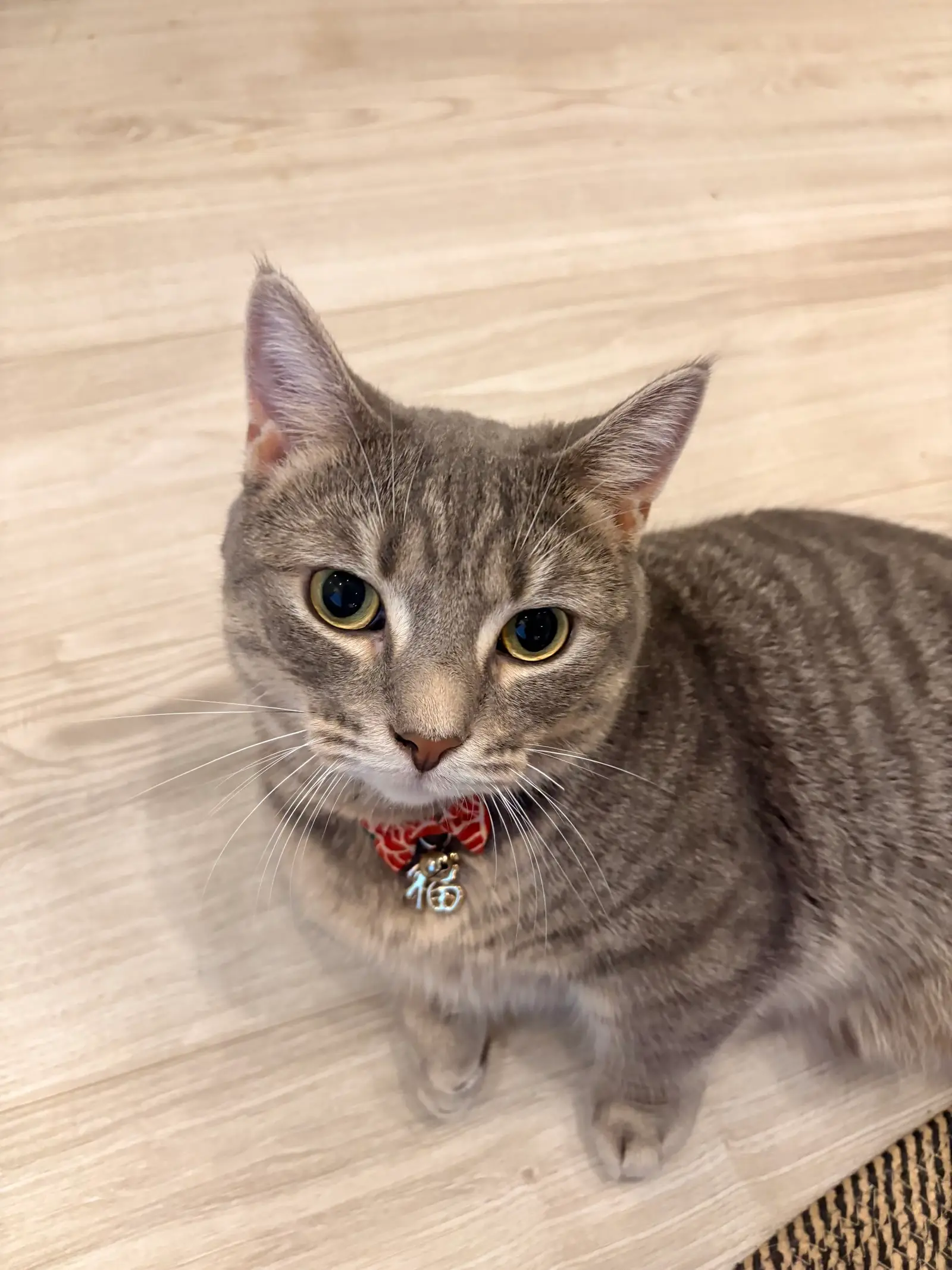
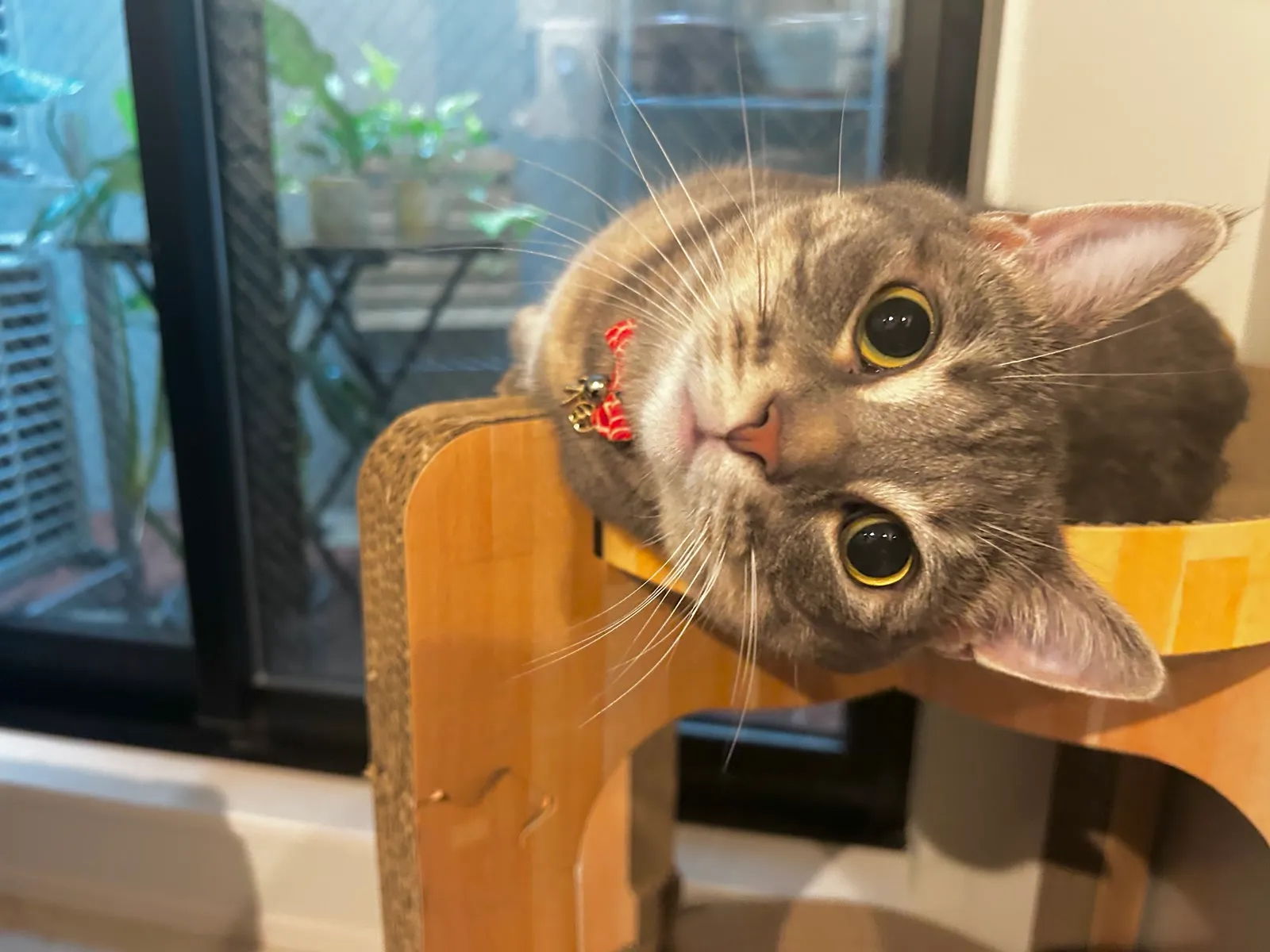
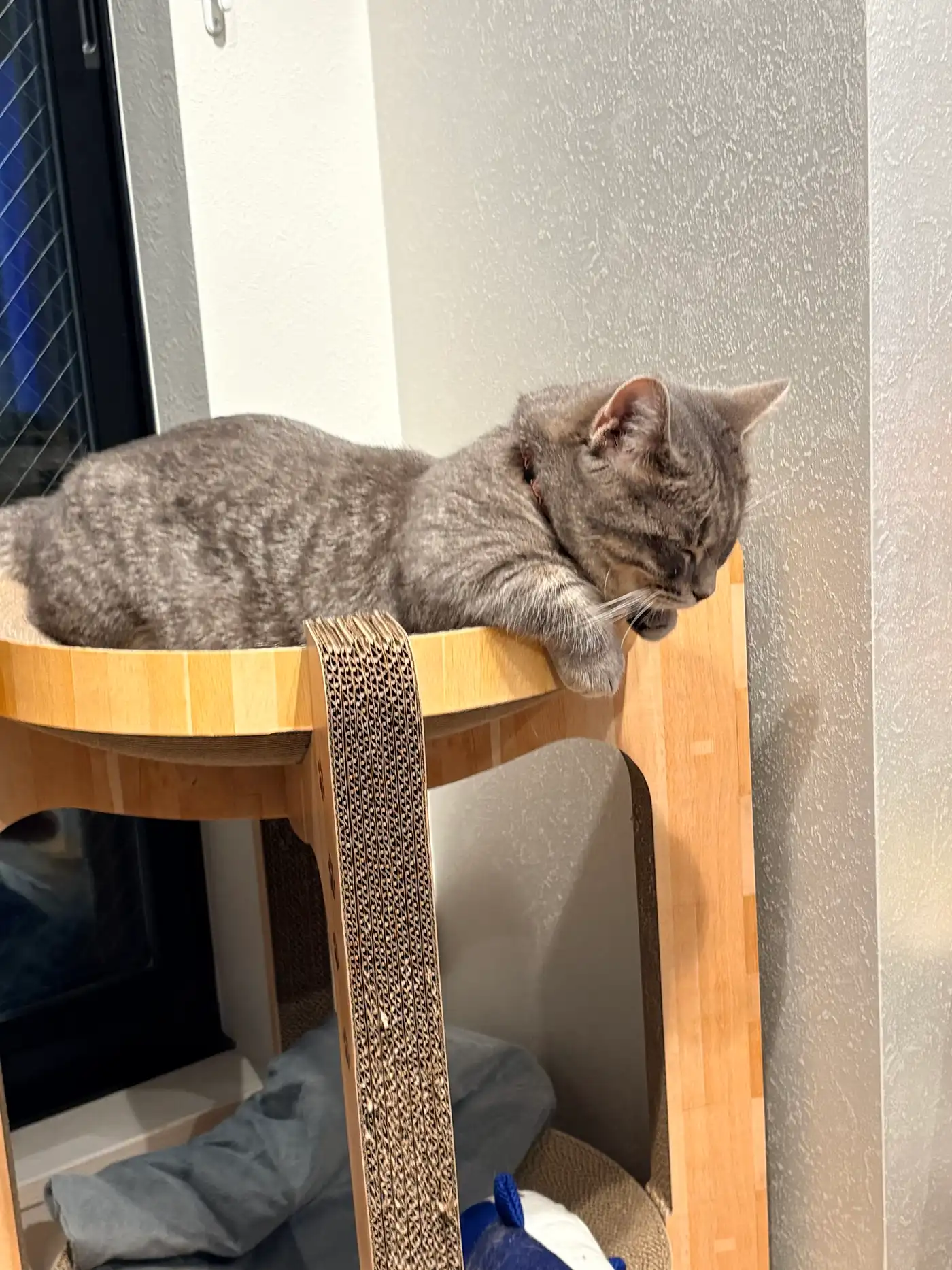
Riku is a real Munchkin, short legs and all. These photos and this clip come from my own files, and they are the only real footage of him on this page.
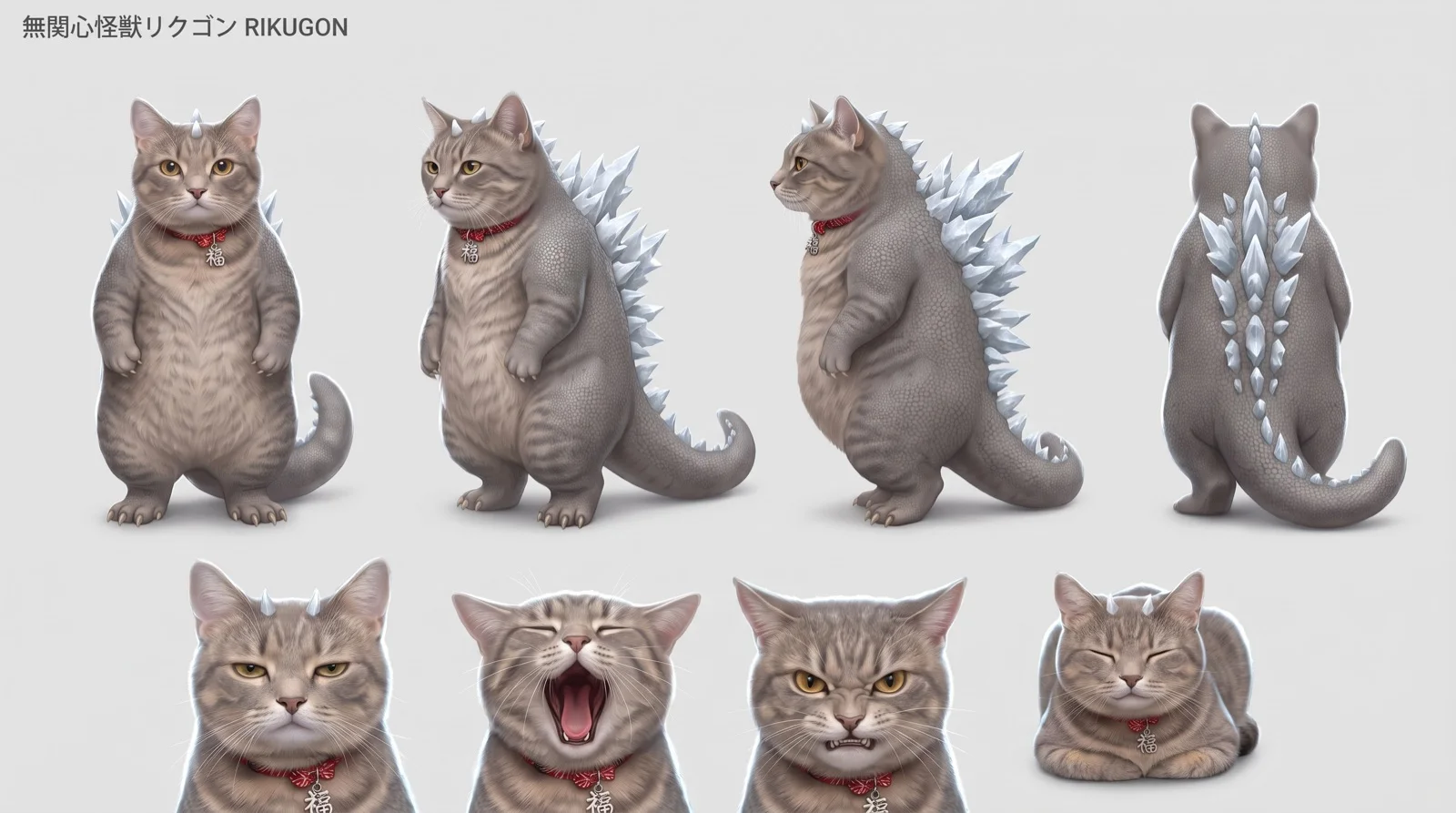
Three of the stills are among the four photos I gave the image model to build his character sheet. The sheet locks his face and coat, so every generated shot starts from the same cat. The real-cat scenes at the end of each episode are generated too.
03 · The season
Five episodes on one engine
Every episode gives Rikugon a want a real cat would have. The Defense Force reads it as an attack, a game-style fight follows, and the real Riku wakes up with one object from the dream. Each episode changes the opponent and the joke while the engine stays put.
Episodes 1 to 3 are out, and each one plays from its card below. Episodes 4 and 5 are next, built on the same template.
1 · Riku Has Landed
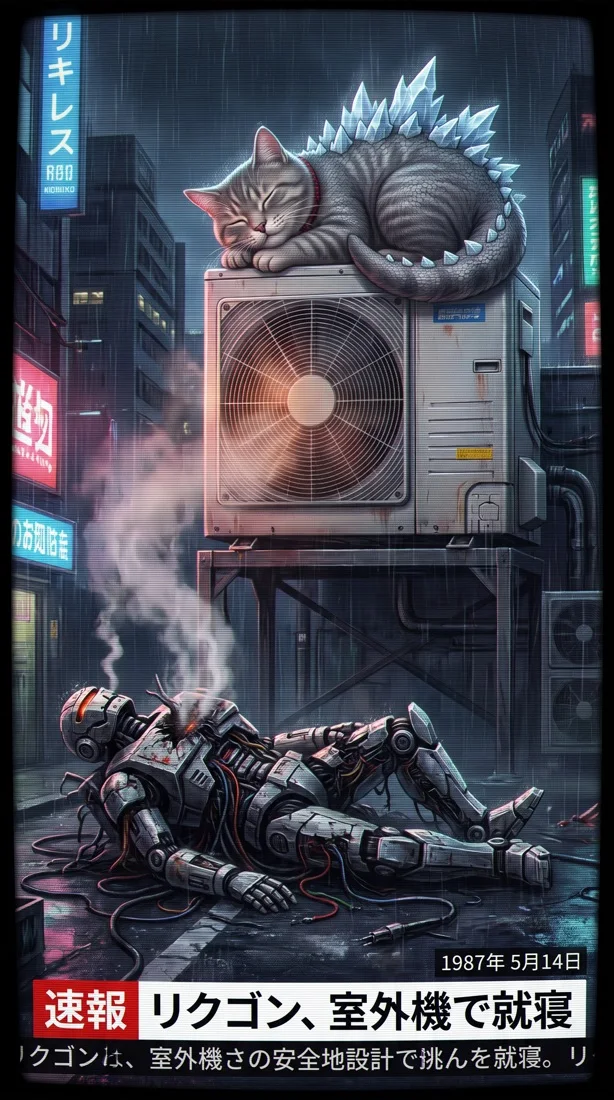
a Defense Force robot arrives, and Rikugon ends up asleep on a warm outdoor air-conditioner.
2 · Leave It Open (working title)
the humans brace a hangar gate, and he brings it down by tugging, swatting and nudging.
3 · Garbage Day Showdown
a crow steals his fish cake, and a short food dispute ends the fight.
4 · Operation Silver Vine
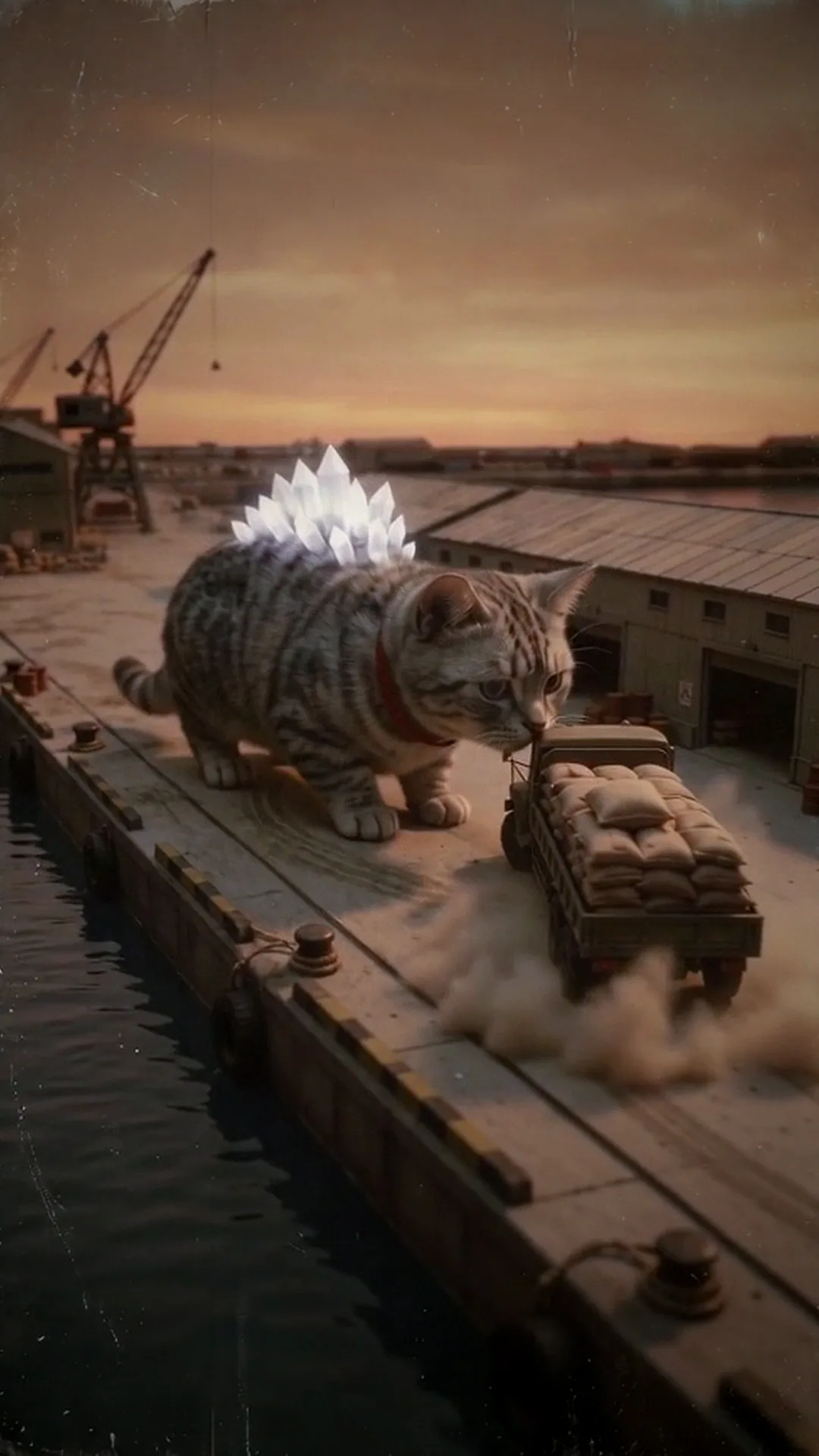
an attack spills silver vine everywhere, and a tank buries its own camera under supply sacks.
5 · Mecha-Rikugon Attacks
a robot copy takes his spot, and identical steps walk it off a ledge.
04 · Looks
Four looks, then a rework
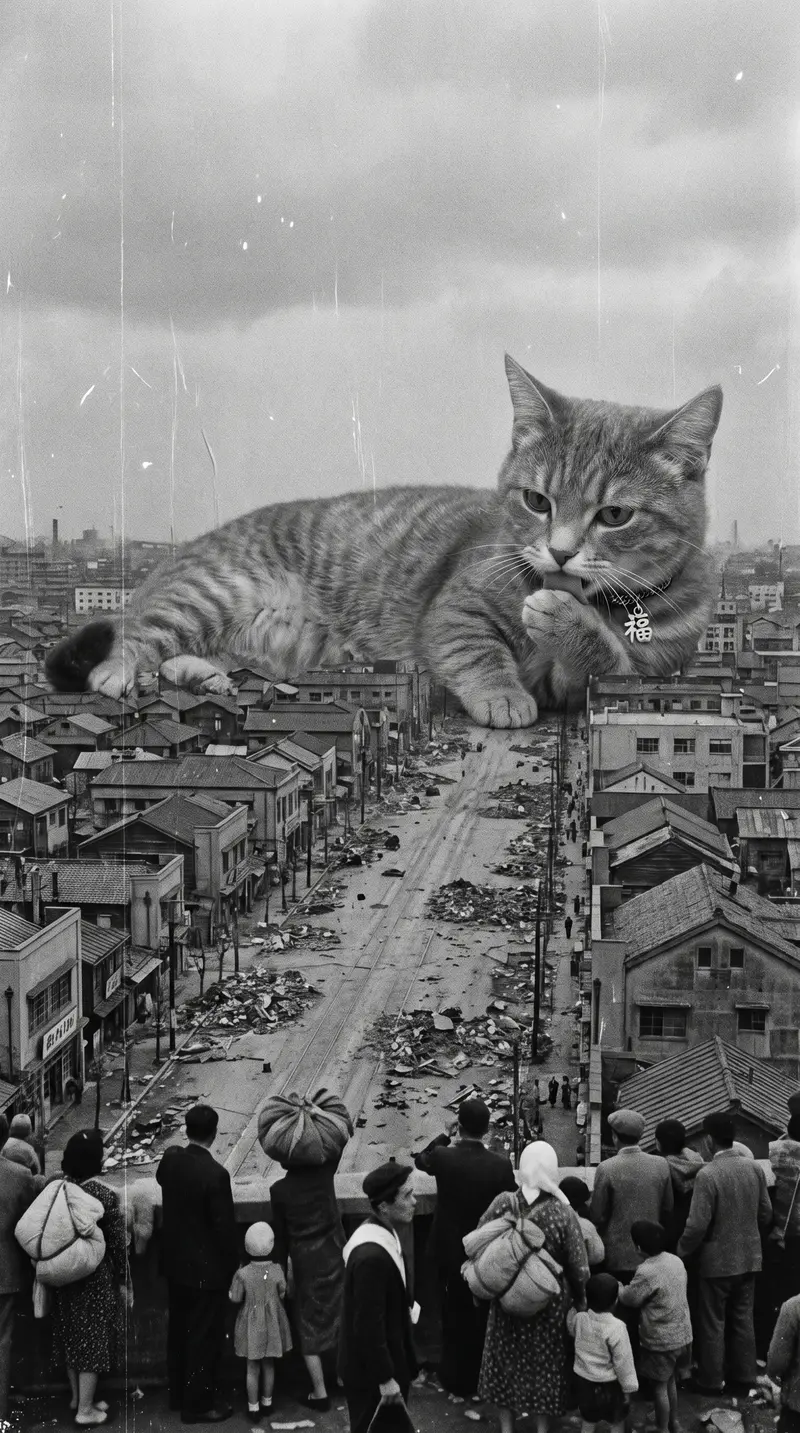
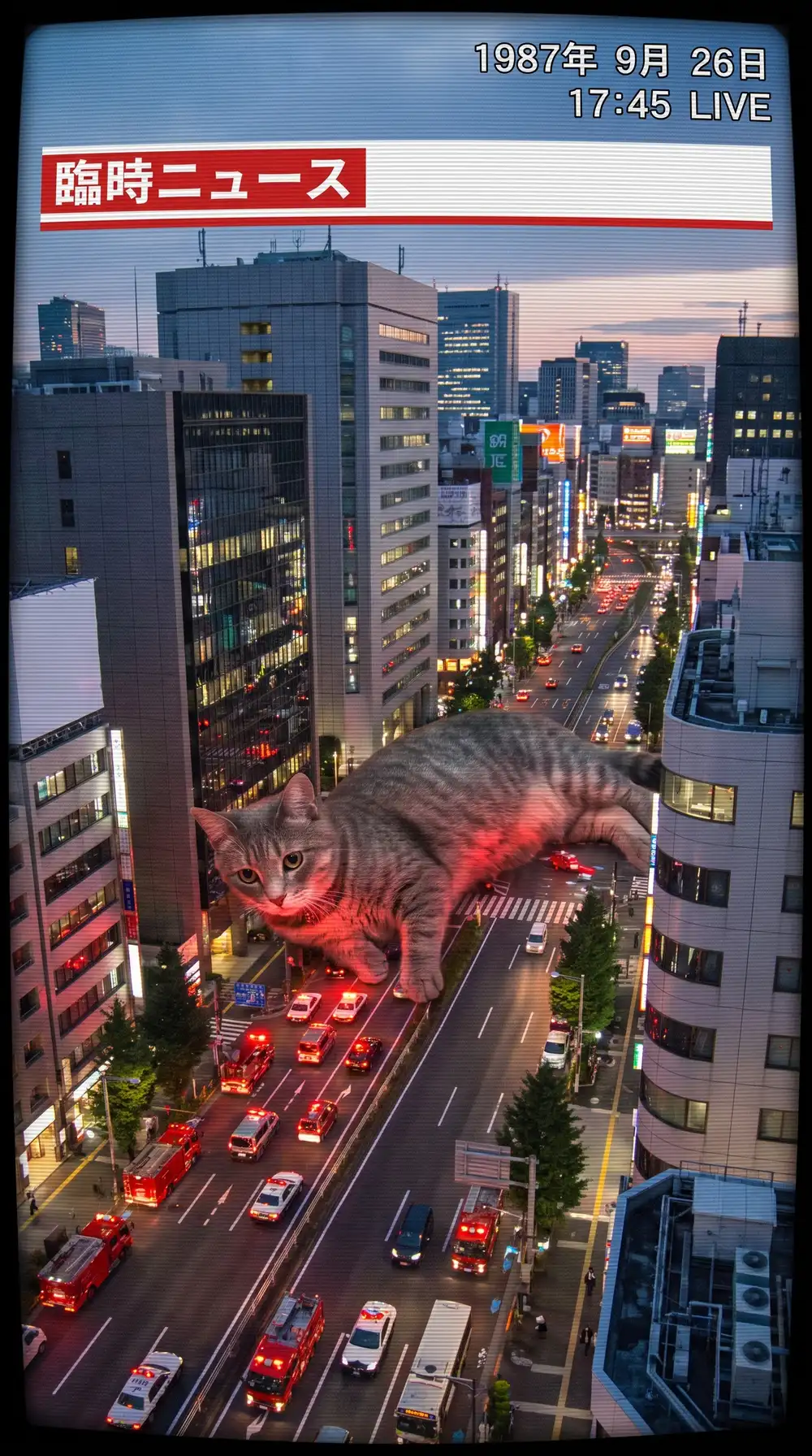
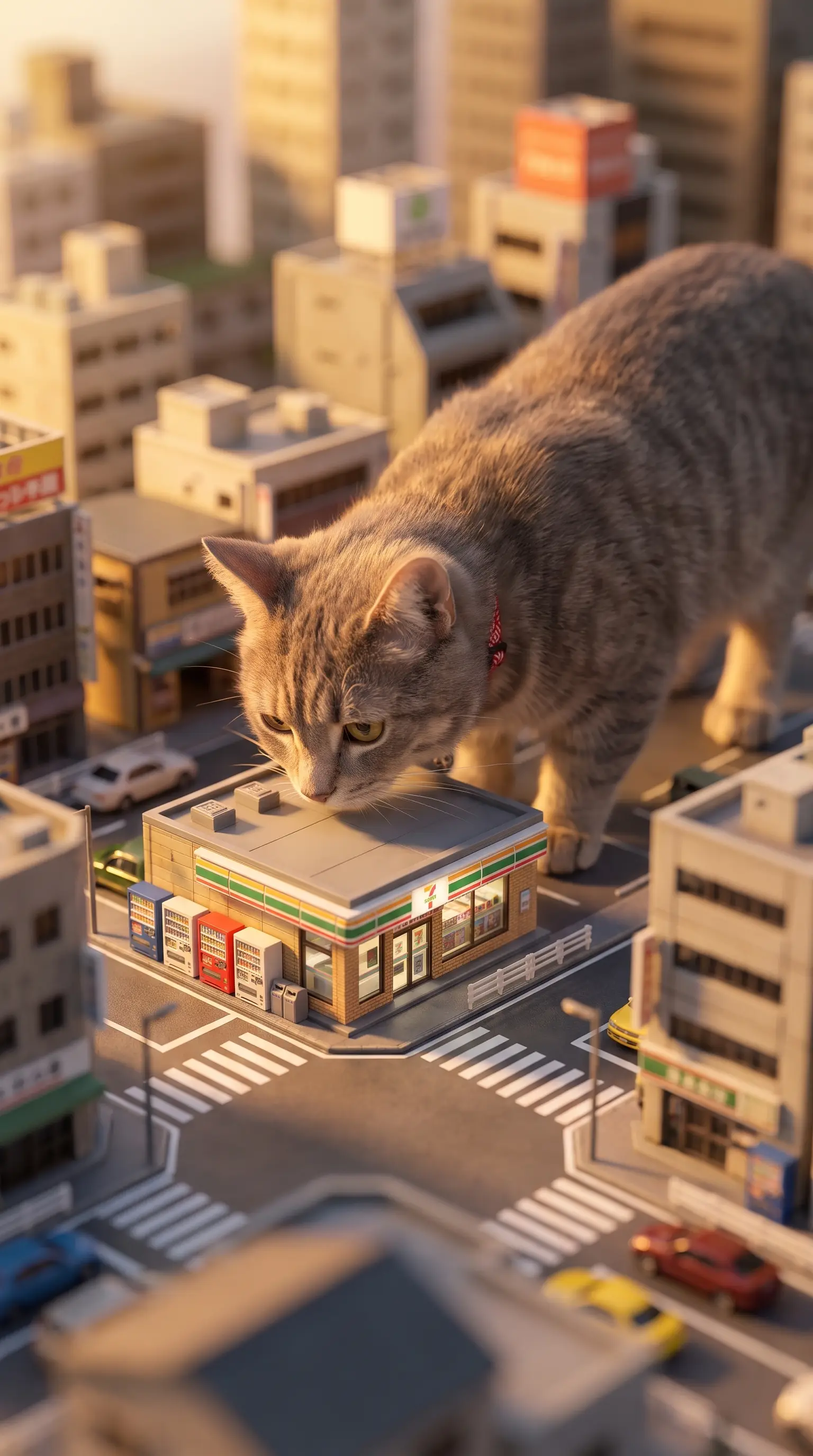
I started with four looks on mood boards: 1970s tokusatsu (特撮, Japanese practical-effects film), black-and-white newsreel, 1987 TV news and a miniature diorama. The first lock on 10 October used the TV-news look as the frame, with the Defense Force footage in tokusatsu. My v2 notes the same day moved everything, news segments and game HUD included, into the 16mm tokusatsu look.
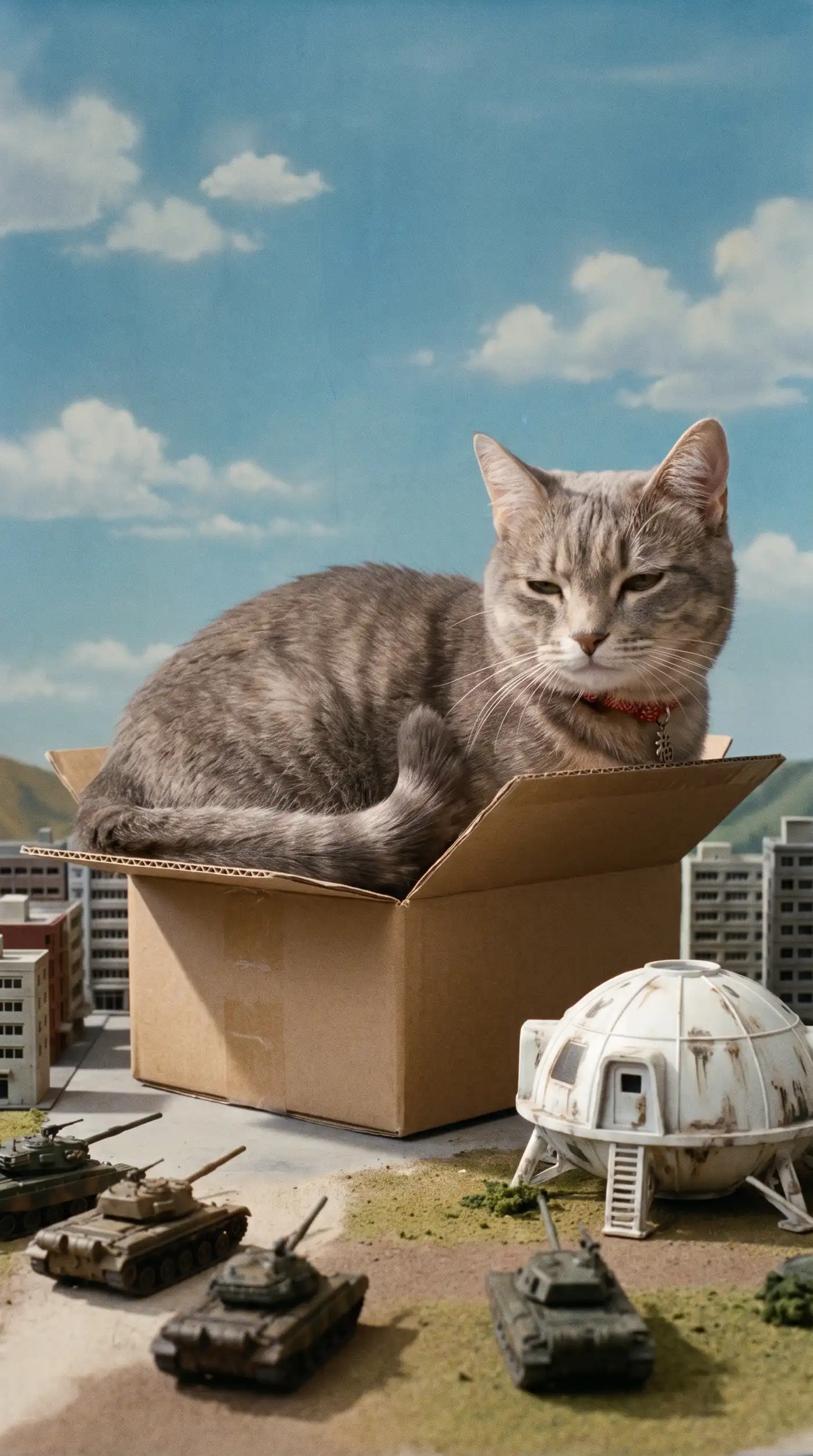
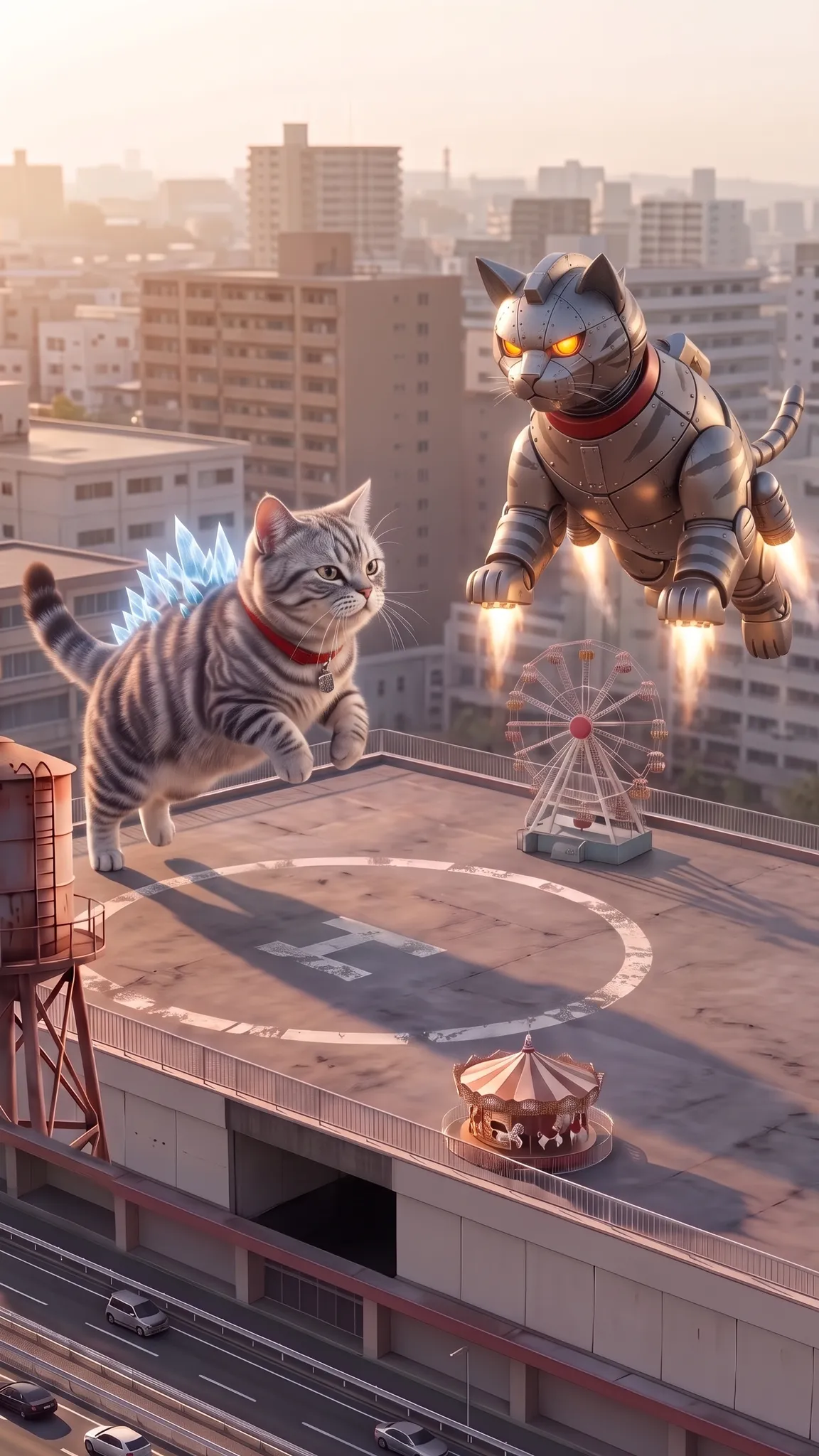
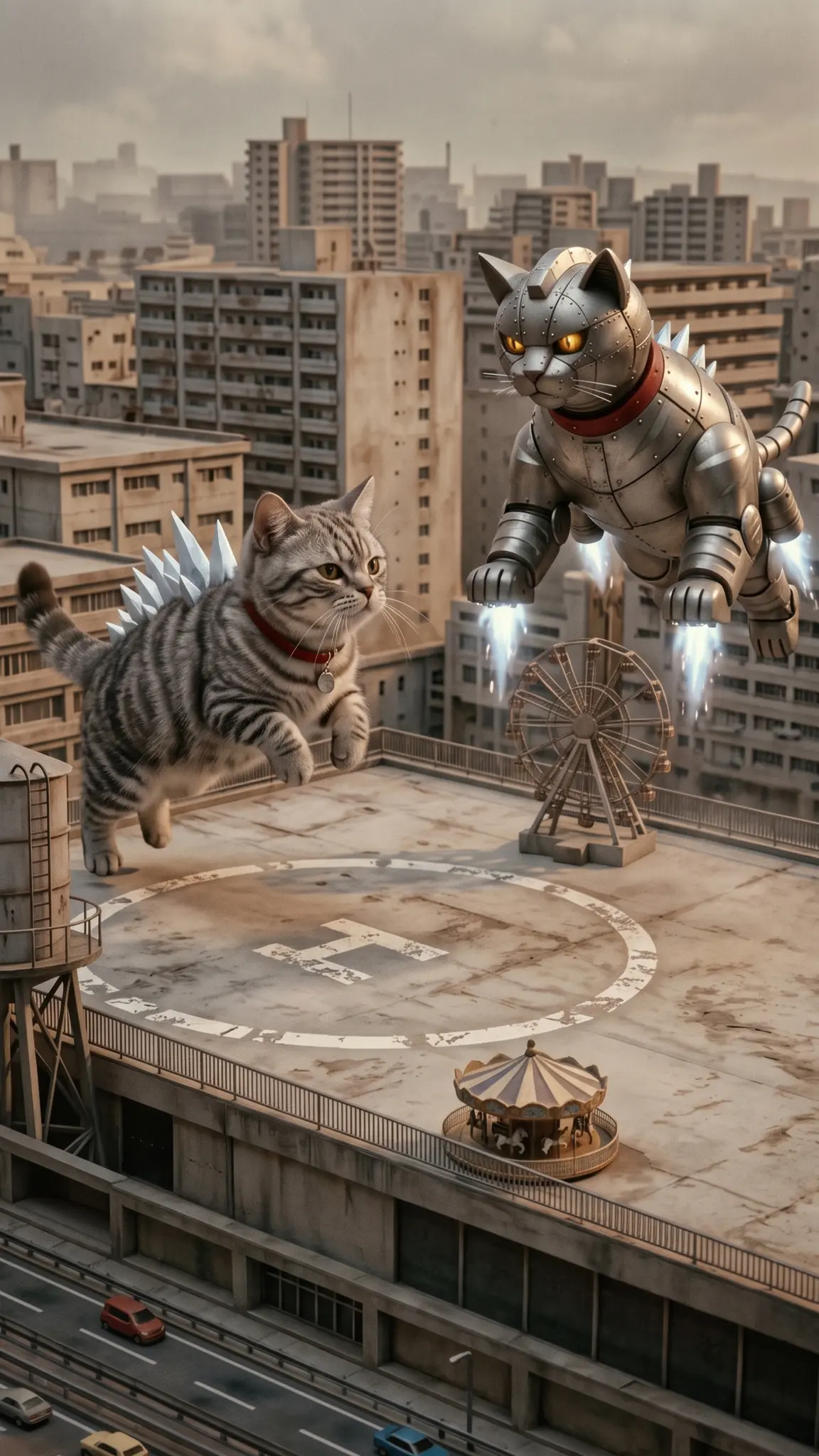
The look kept moving at the shot level. Episode 5 first came out clean and glossy. On 16 October I asked for the original miniature-film look back, with the layout and staging unchanged. A flat overcast sky and a grimy rooftop made the same shot read as a model on a stage.
05 · The pipeline
Every shot takes the same path
Locked character sheets come first, and a character without a sheet doesn't go on screen. From the sheets I make a clean still with no text in it. The still becomes video in Seedance. After Effects takes the clip, grades it, and adds what the models handle badly: captions, the game HUD and all the type.
Two Seedance models split the work. The 2.5 model takes key shots, anything where Riku's face and coat have to read, and the beat an episode hangs on. The faster 2.0 model takes wides, cutaways and drafts. Footage is generated at 480p and upscaled in After Effects under film grain, which hides the resolution. Text goes on at full resolution, so it stays sharp.
- Locked character sheets
- Clean still, no text
- Image to video
- Grade in After Effects
- Type, HUD and sound
06 · One shot
One shot, start to finish
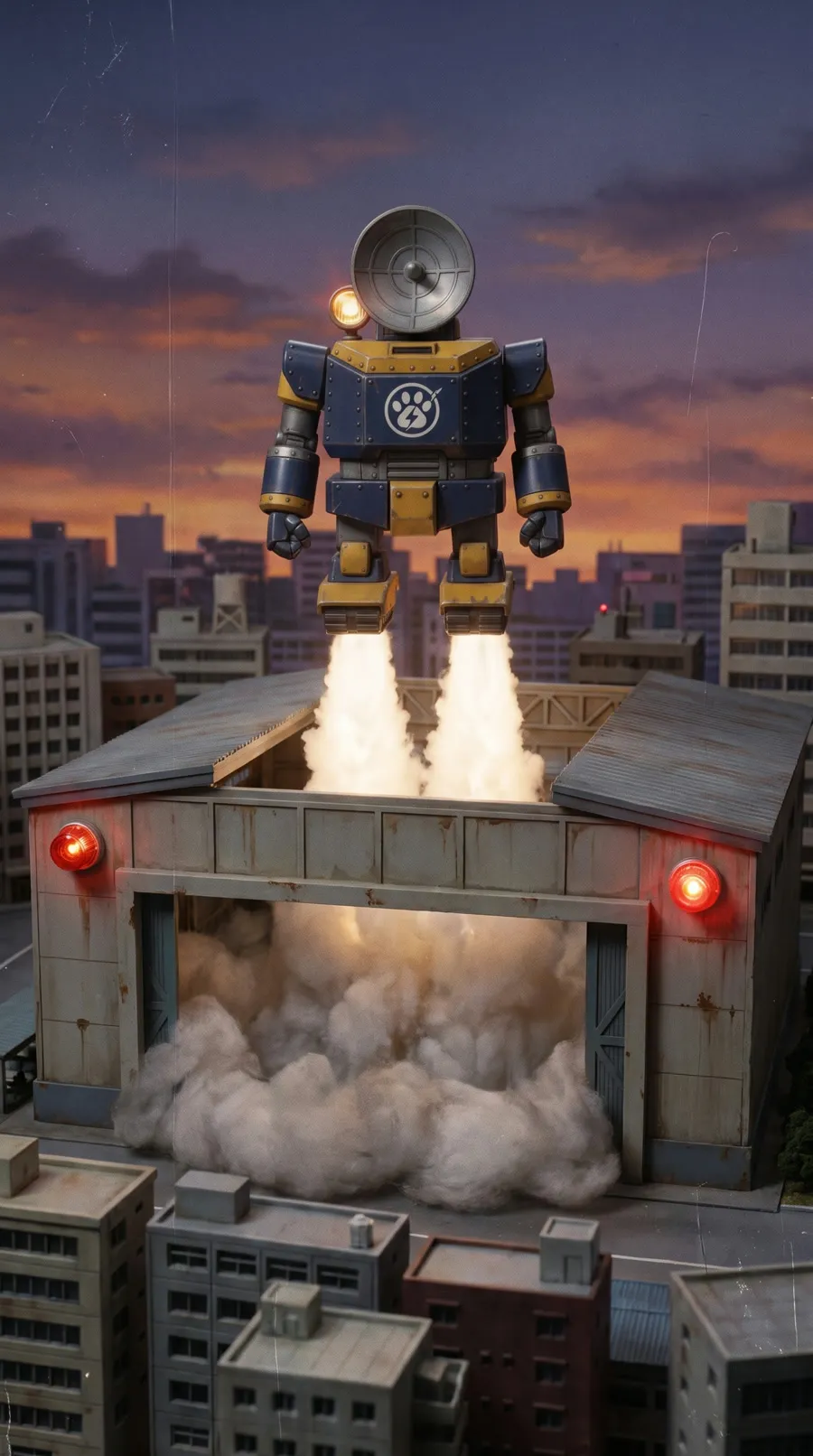
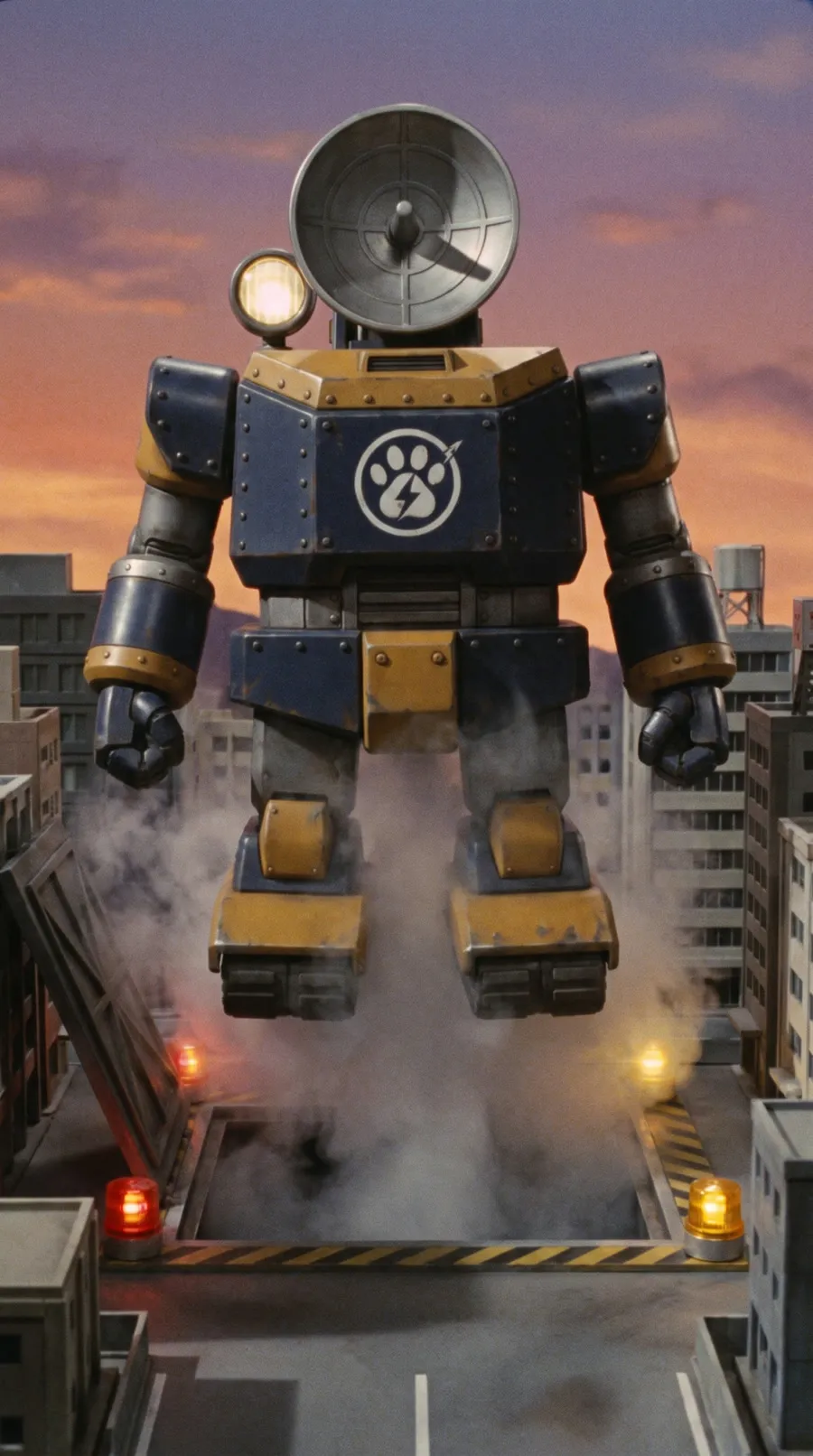
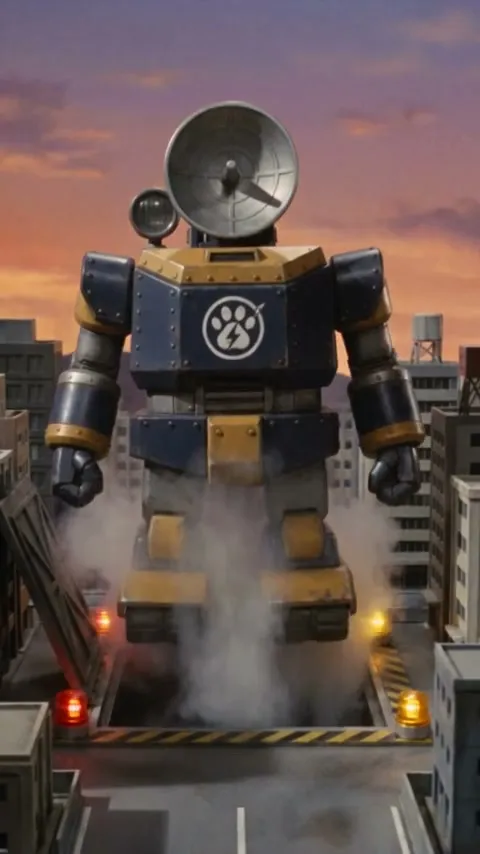
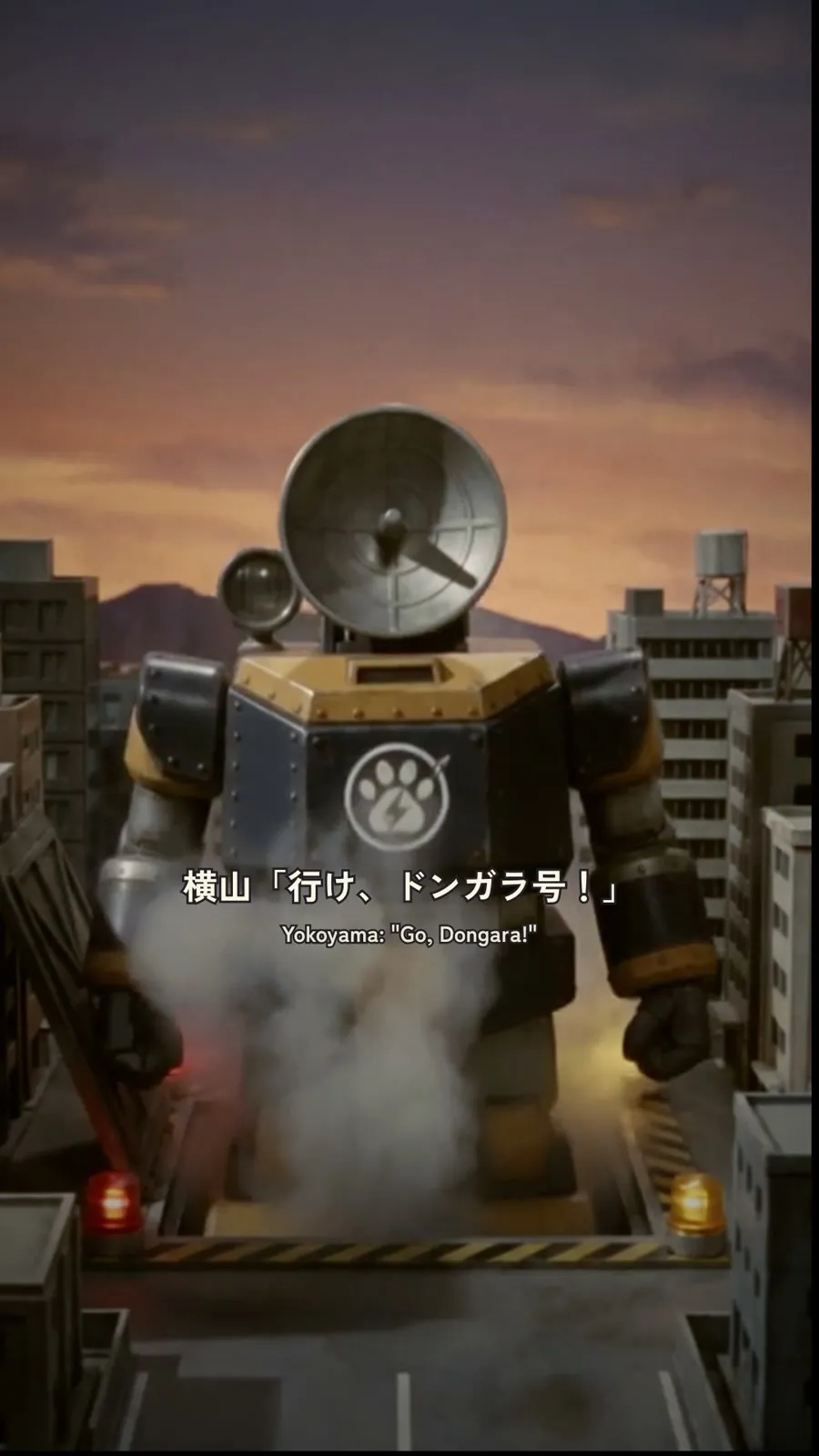
Here is one Episode 1 shot through every stage: the Defense Force robot lifting off. The board draws it above a hangar. The clean still moves the launch to a rooftop pad. Seedance turns the still into the raw clip, and After Effects grades it and puts the speaker label and subtitle on top.
The clip drifts from the still as it plays, so I matched the two by shot number and by the set. The rooftop lights, the hazard stripes and the ladder carry across.
07 · Storyboards
The board decides what gets generated
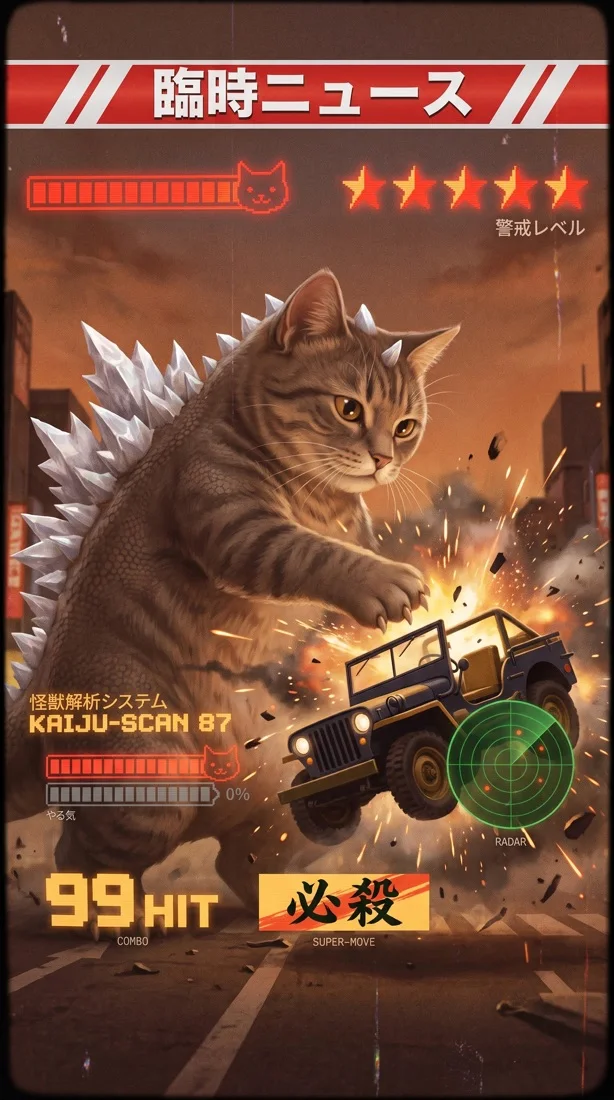
Nothing is generated from a loose idea. Each episode gets a board first, with every shot timecoded and given its spoken line, its sound and a tag for how it will be made. A shot is either an existing clip with exact in and out points, a start frame for a new generation, or a new shot with a written prompt.
The tags stop me from regenerating footage I already have. Red notes on a frame mark a known flaw, like a crow's net that is missing from every take, or a cut that has to end before a muzzle flash.
08 · The kit
A world that holds still
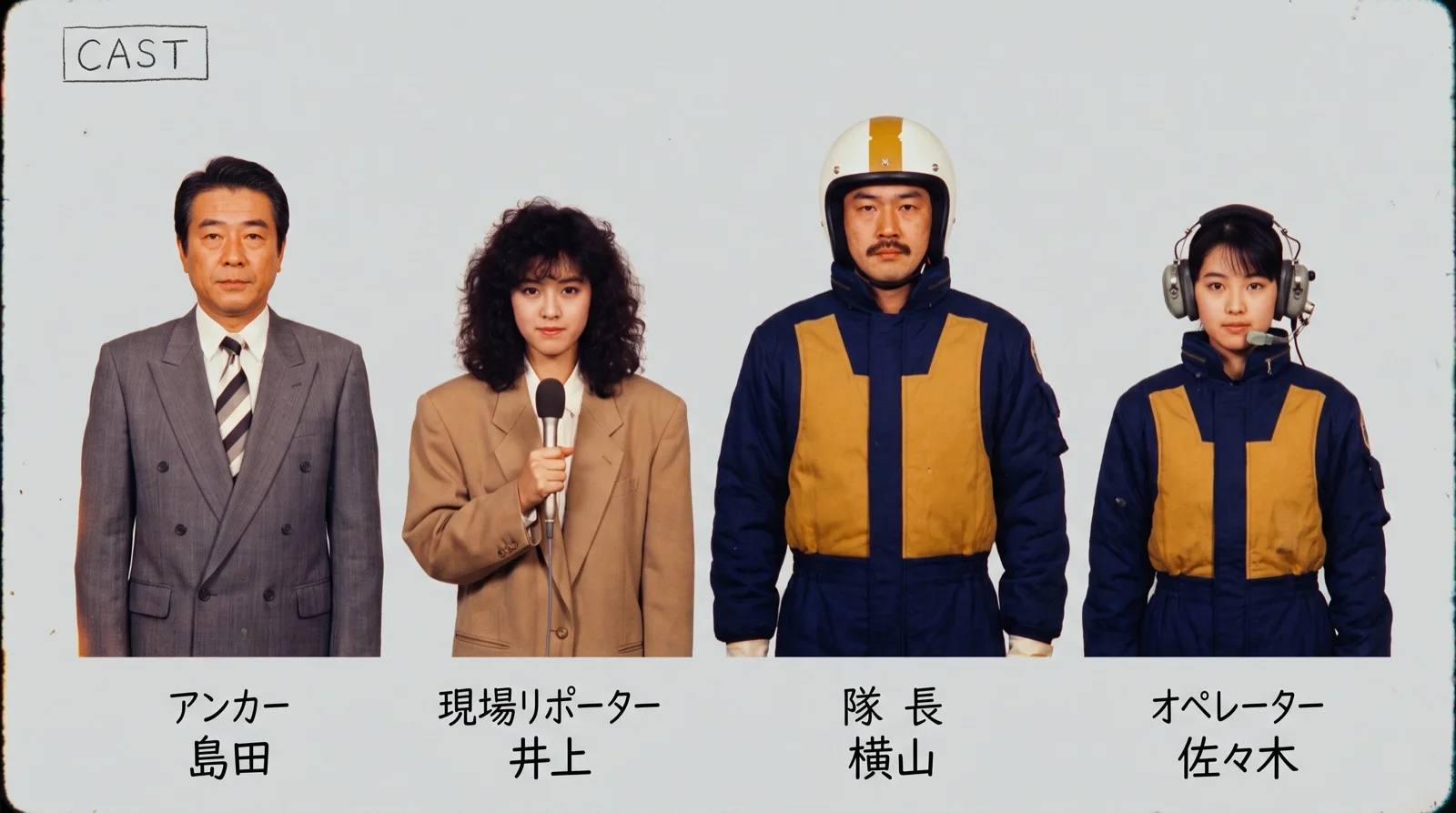
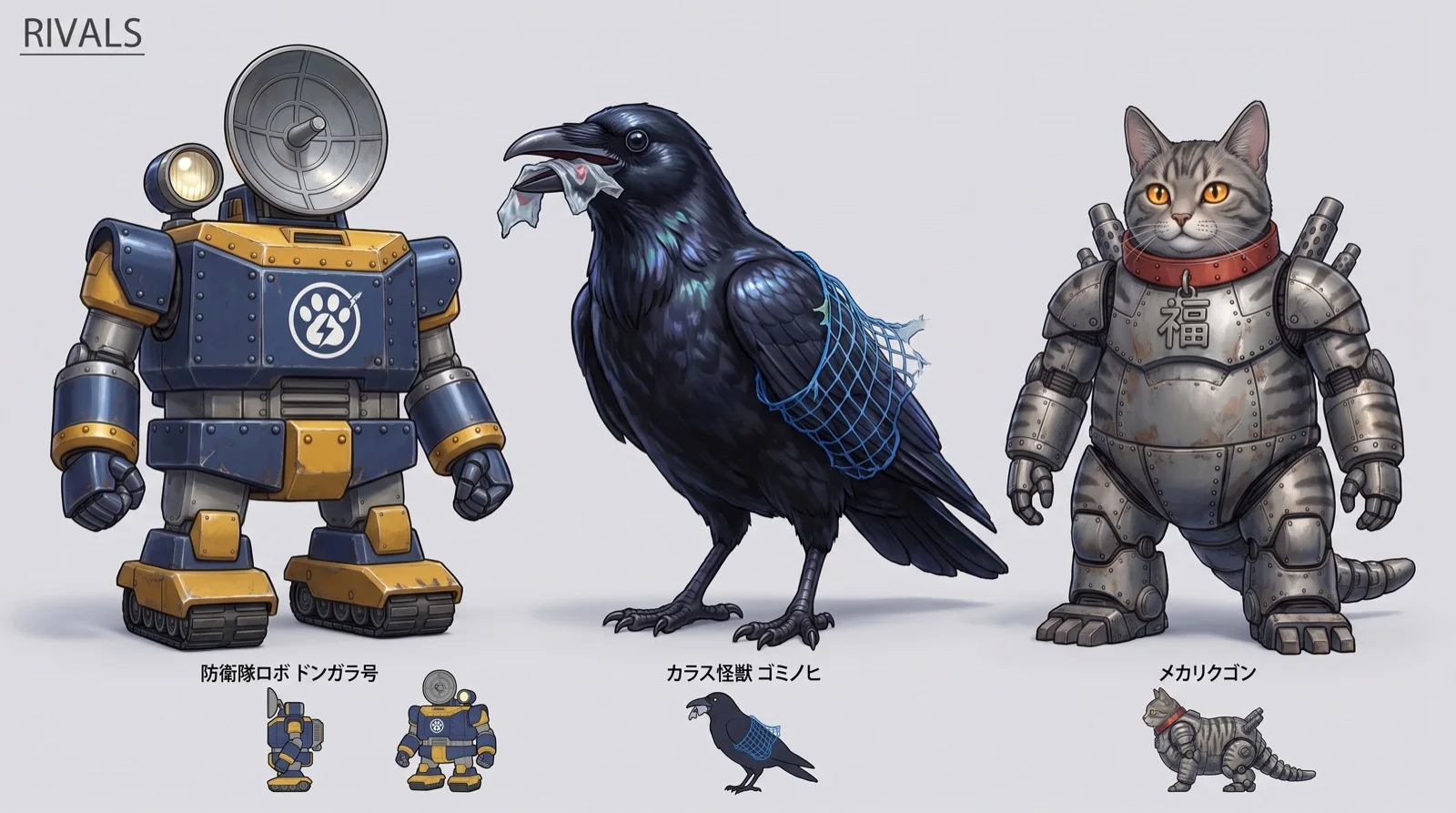
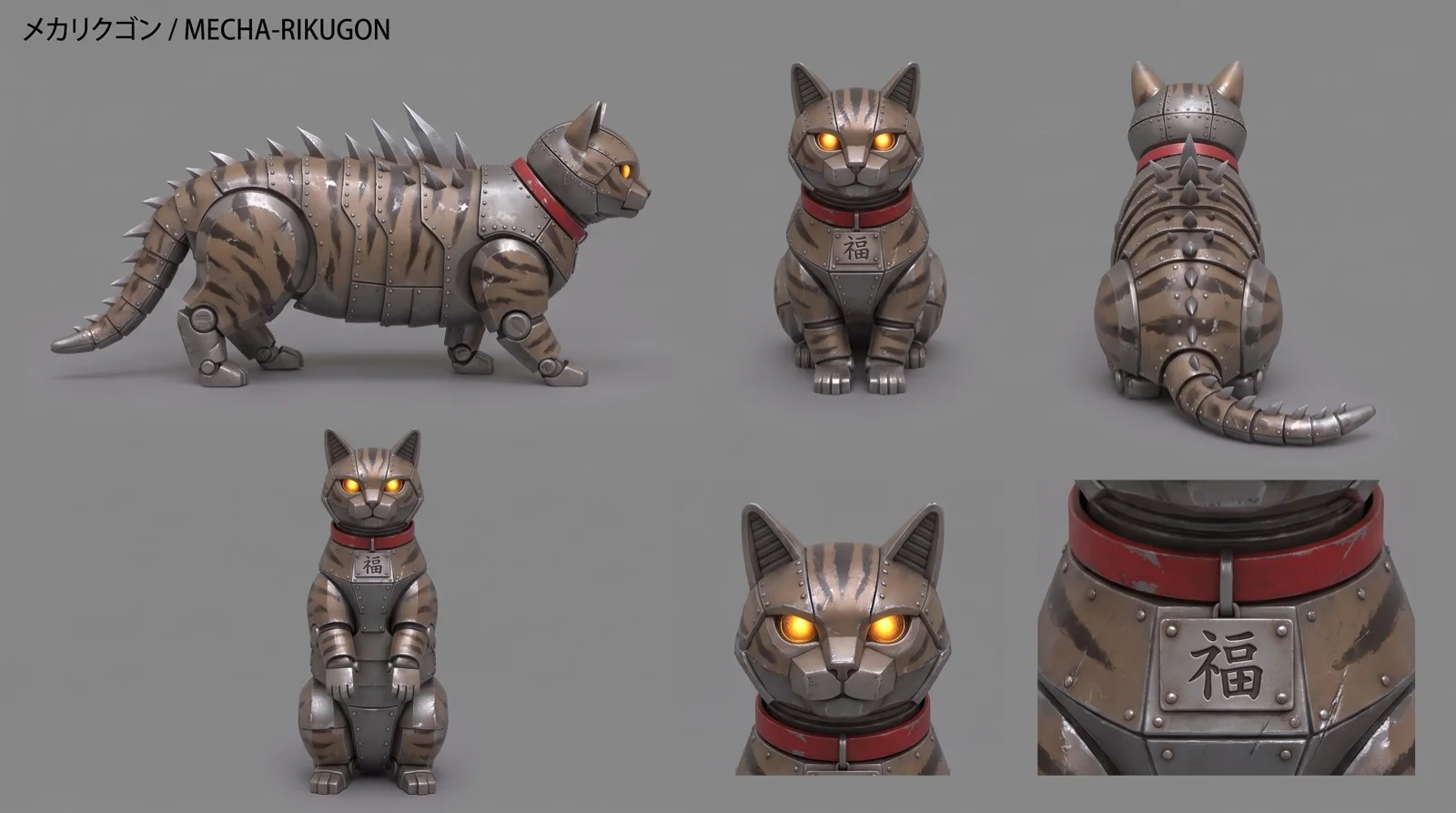
Generated characters only work if they stay the same character. Each one has a contact sheet: the kaiju, the Defense Force, the news crew, two robots and a crow. Every shot carries the sheet of everyone in it.
The look has rules too. Heavy grain, faded warm color, halation, plaster miniatures, painted skies. The enemy robot is deliberately not Gundam. The theme is an original march with a straight-faced cat chorus. The roar is Riku's real meow, pitched down one to two octaves under a hall reverb.
09 · After Effects
What the models can't do
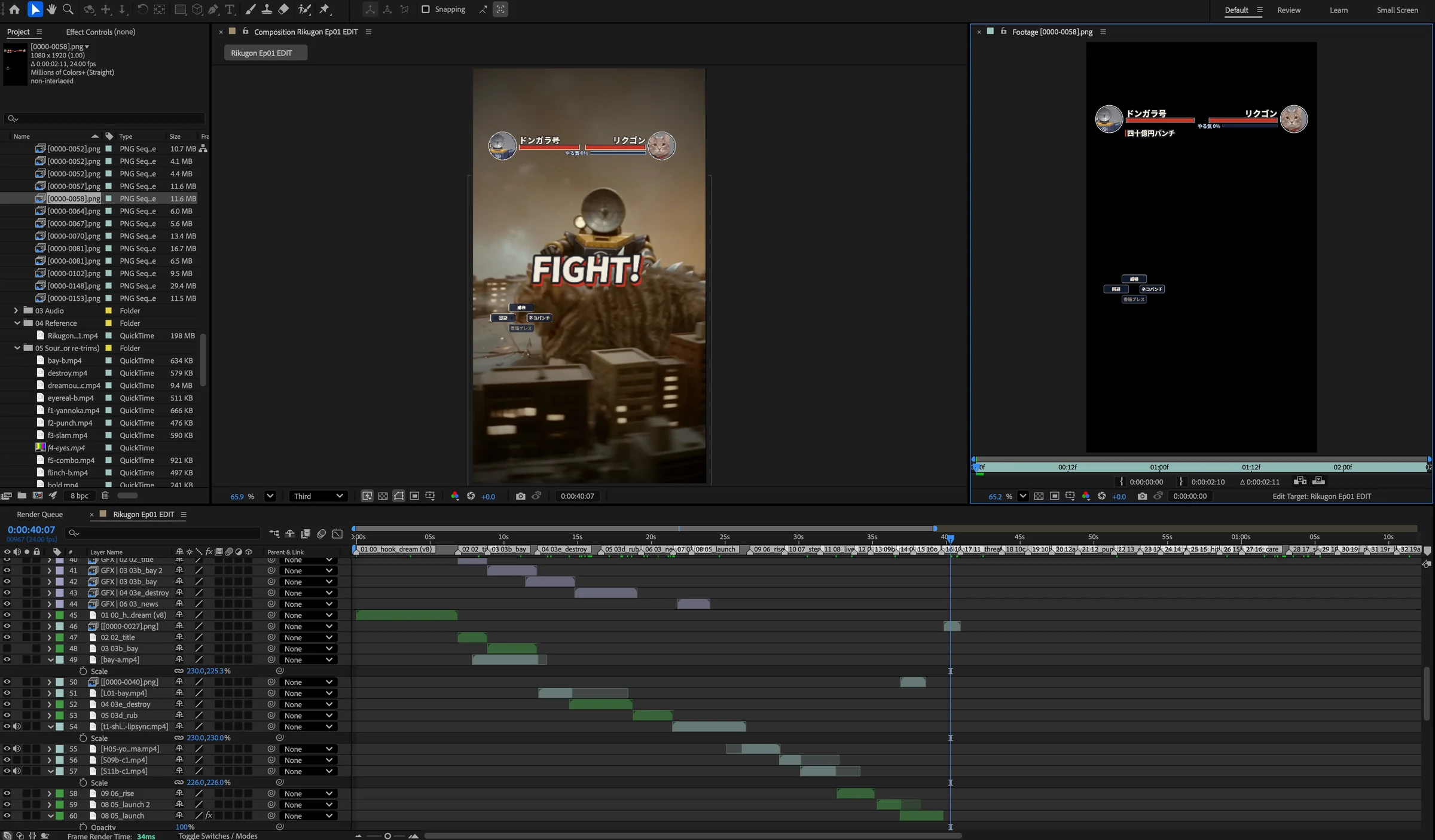
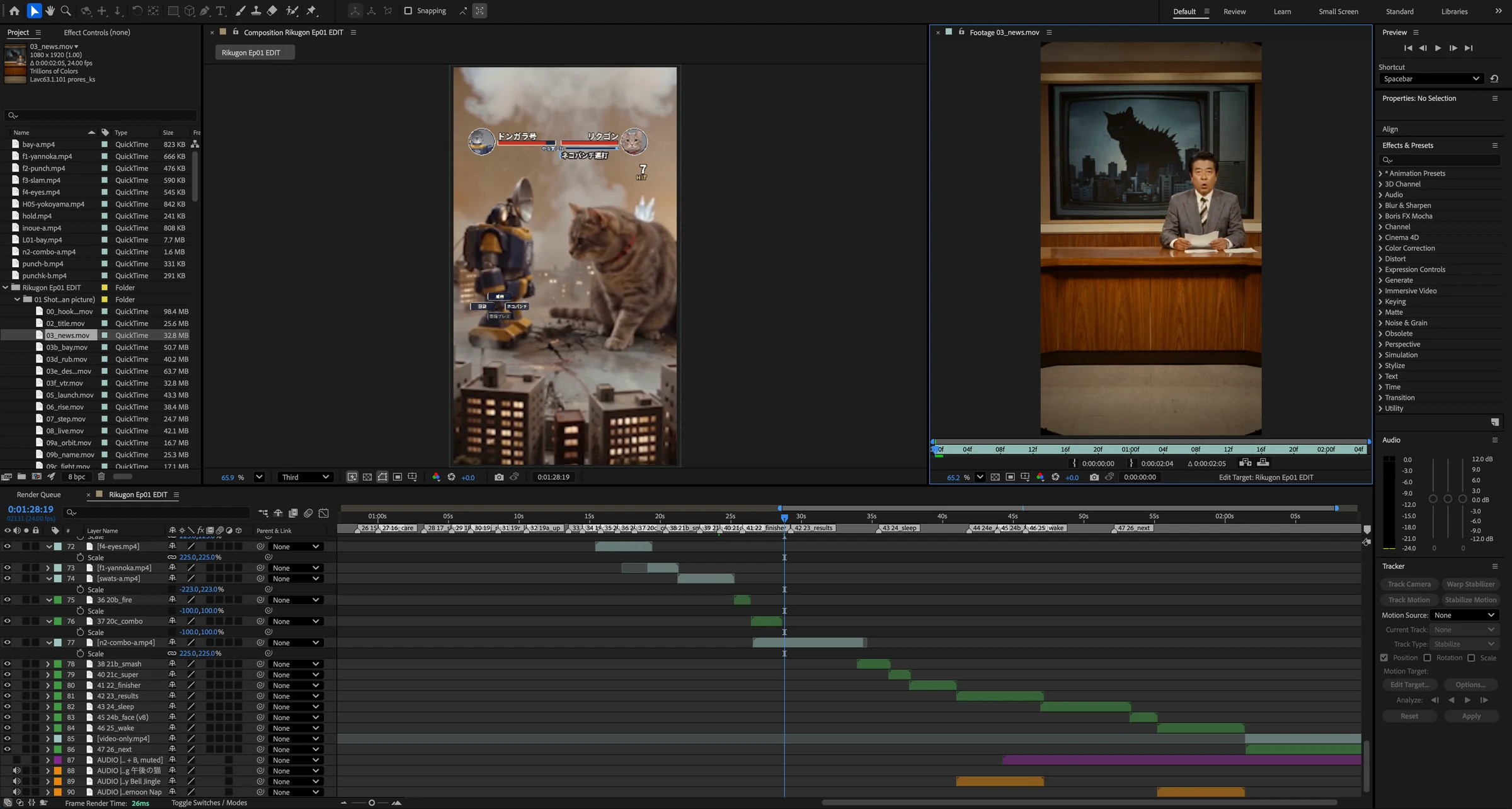
AI video gives me footage. An episode takes timing, grade, sound and a layer of graphics, and those get built in After Effects.
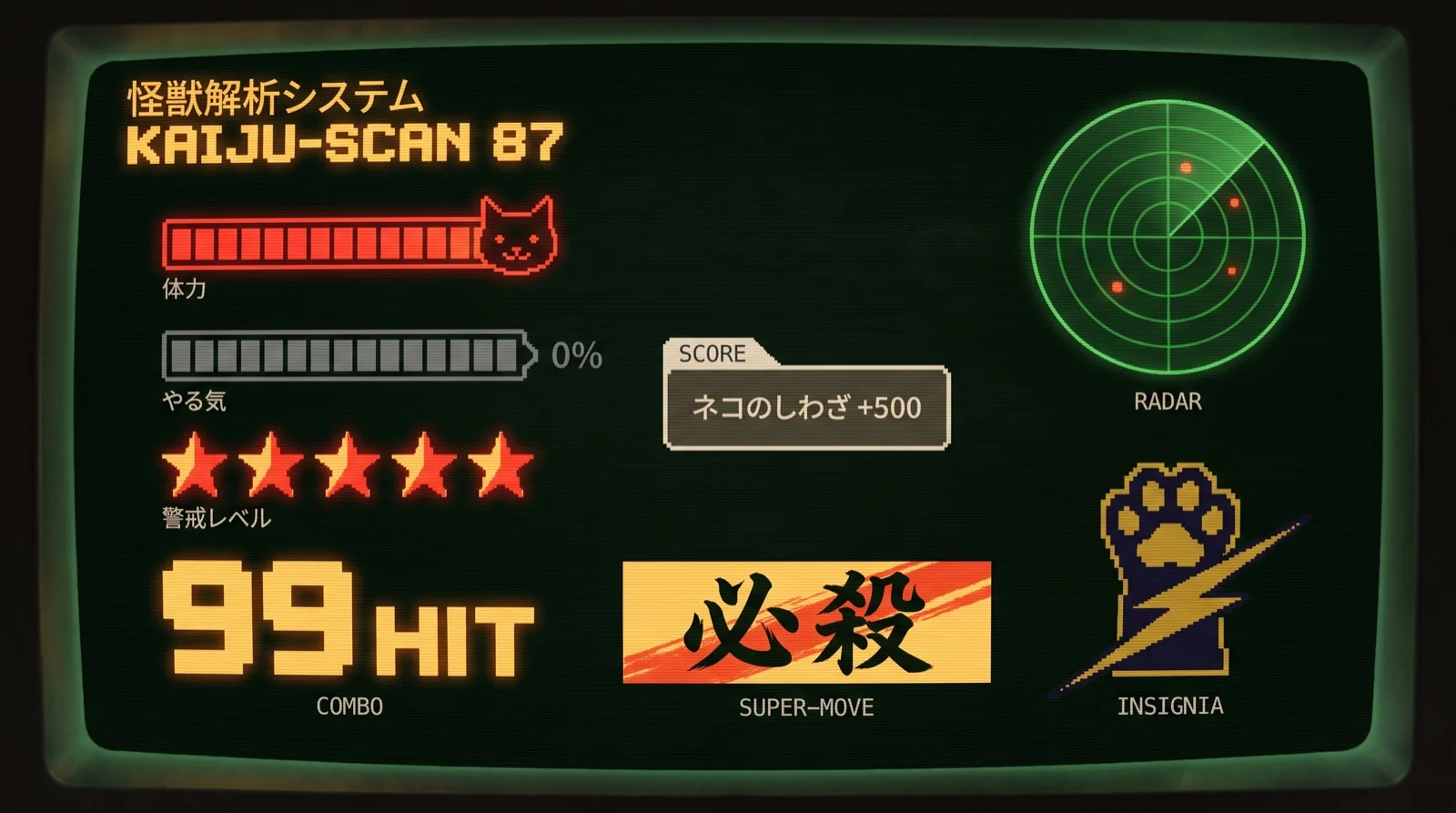
Captions, the KAIJU-SCAN threat meter, name cards and the result screen are all drawn in the edit, in exact type. The models never generate them. The screenshots below show Episode 1 in the edit.
10 · Division of labor
What the model did and what I did
The models make a lot of footage fast. Most of my time goes into deciding which of it to use, and into what happens when none of it works.
AI
- Generated every monster, set and crowd shot from the locked sheets.
- Turned stills into short clips, several takes per shot.
- Drafted voices for the captain and the news crew.
- Wrote the scripts that assemble the After Effects projects.
- Couldn't keep a falling robot the right size, or keep a giant cat looking giant.
Hand
- Wrote the story, the jokes and the closing line of each episode.
- Picked the takes, cut them, and trimmed where a model invented a flash or an angle jump.
- Directed every line and fitted the sync phrase by phrase.
- Edited Episode 1 myself in After Effects. My file is the source of truth, and scripts only patch it.
- Rejected the attempts and put the shot on hold instead of shipping it.
11 · Side stories
Five formats around the main series
Around the episodes sit five side stories, each in a different TV format with its own palette and its own picture idea. They are boarded like the episodes, then shot in chains: every clip starts from the last clip's final frame, so a format needs only a handful of new pictures.
The formats are borrowed on purpose. A kaiju who never cares is funniest when he turns up inside things that are supposed to be glamorous.
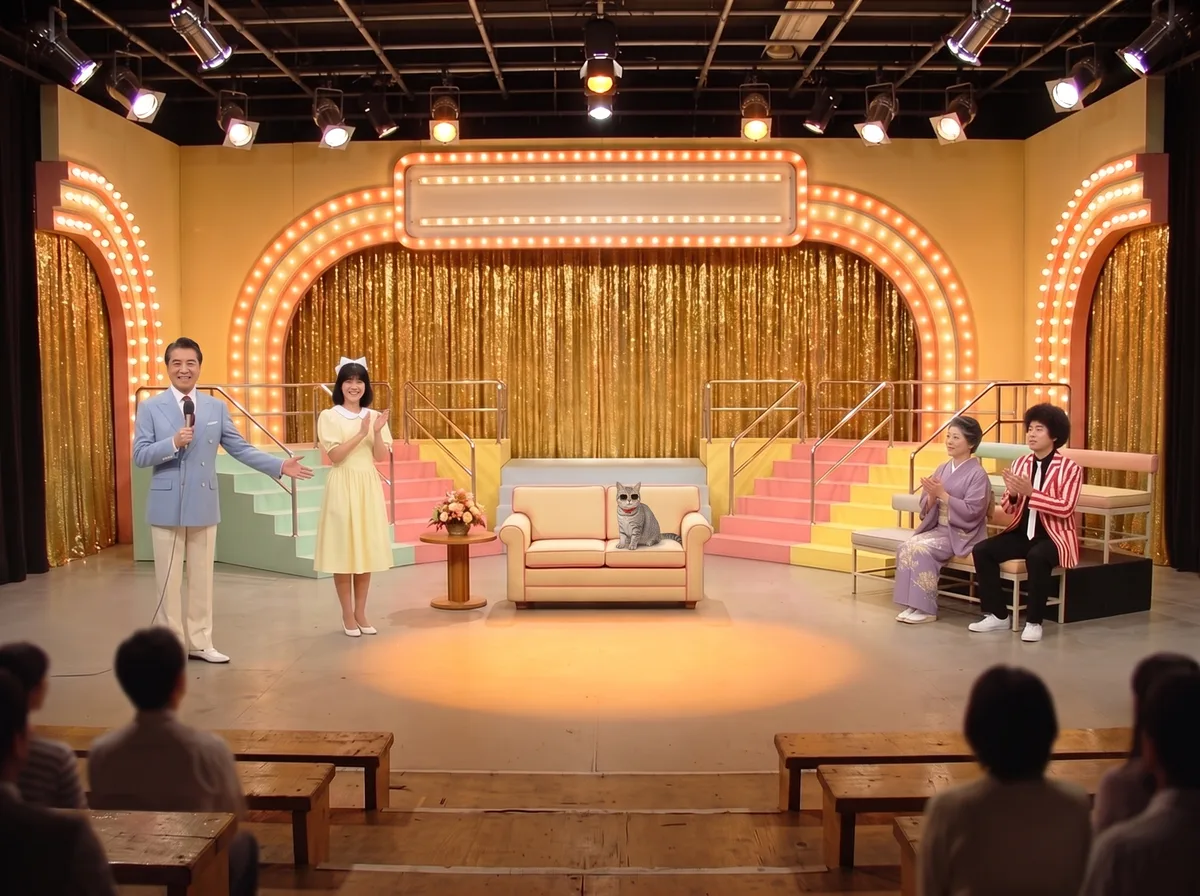
Star interview, 夜のスタークラブ (Night Star Club)
a high-key 1980s talk show with Riku small on a big set, and a warm amber 16mm biography reel in the middle.
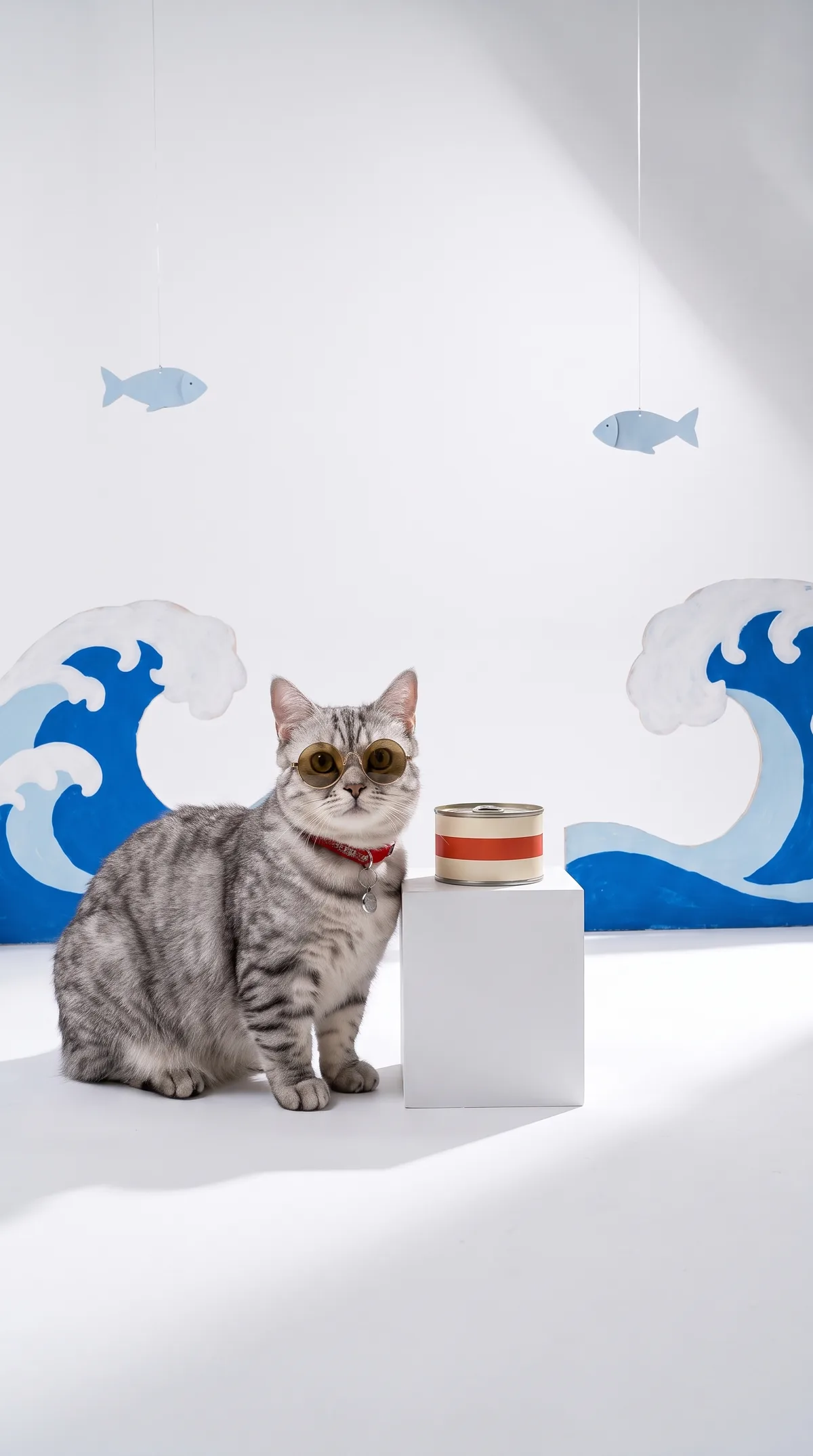
Product CM, リク印・ねこ缶 (Riku Brand Cat Can)
one can, one hard light on a white cyc. The star approves the can, then pushes it off the plinth.
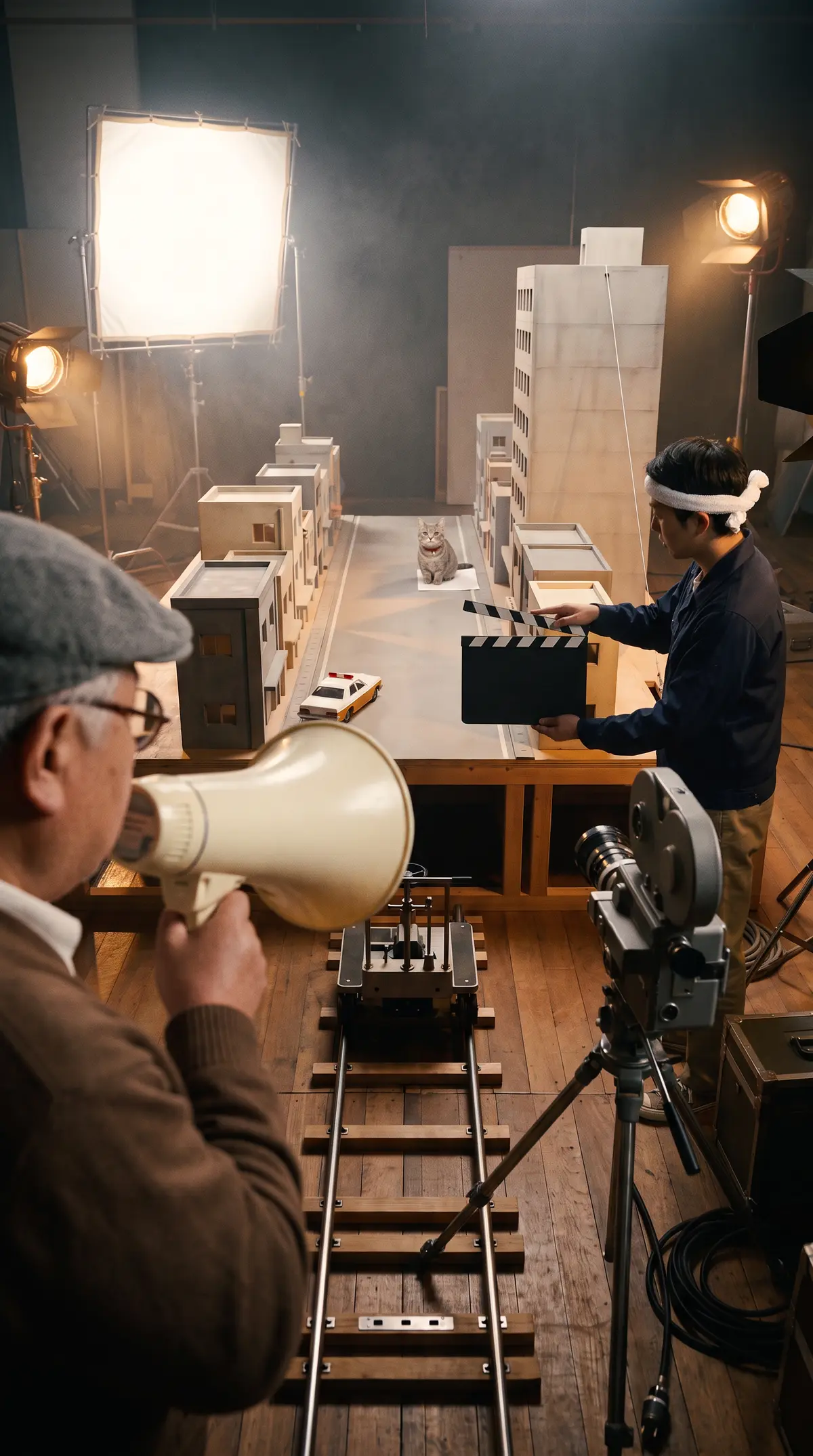
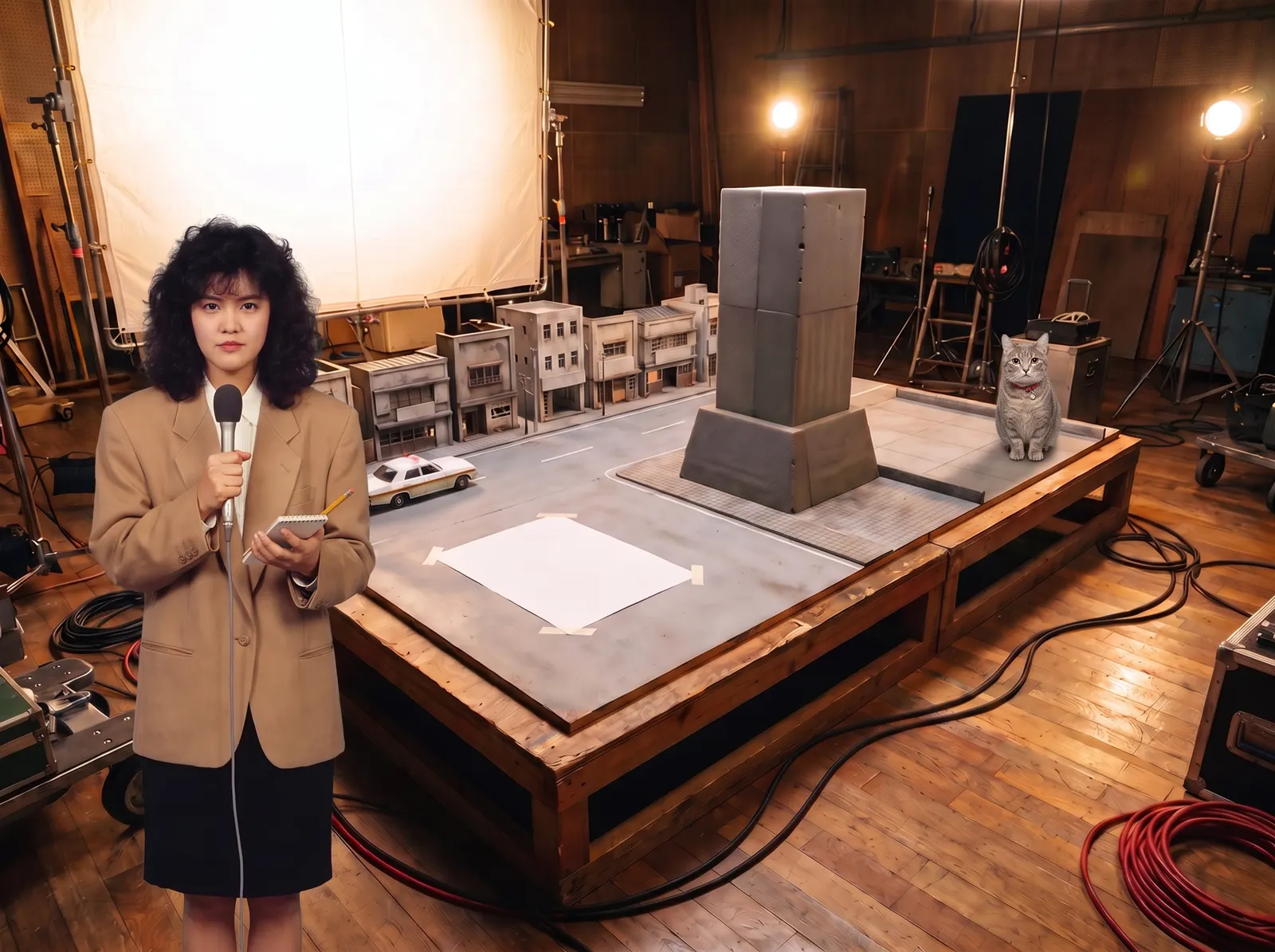
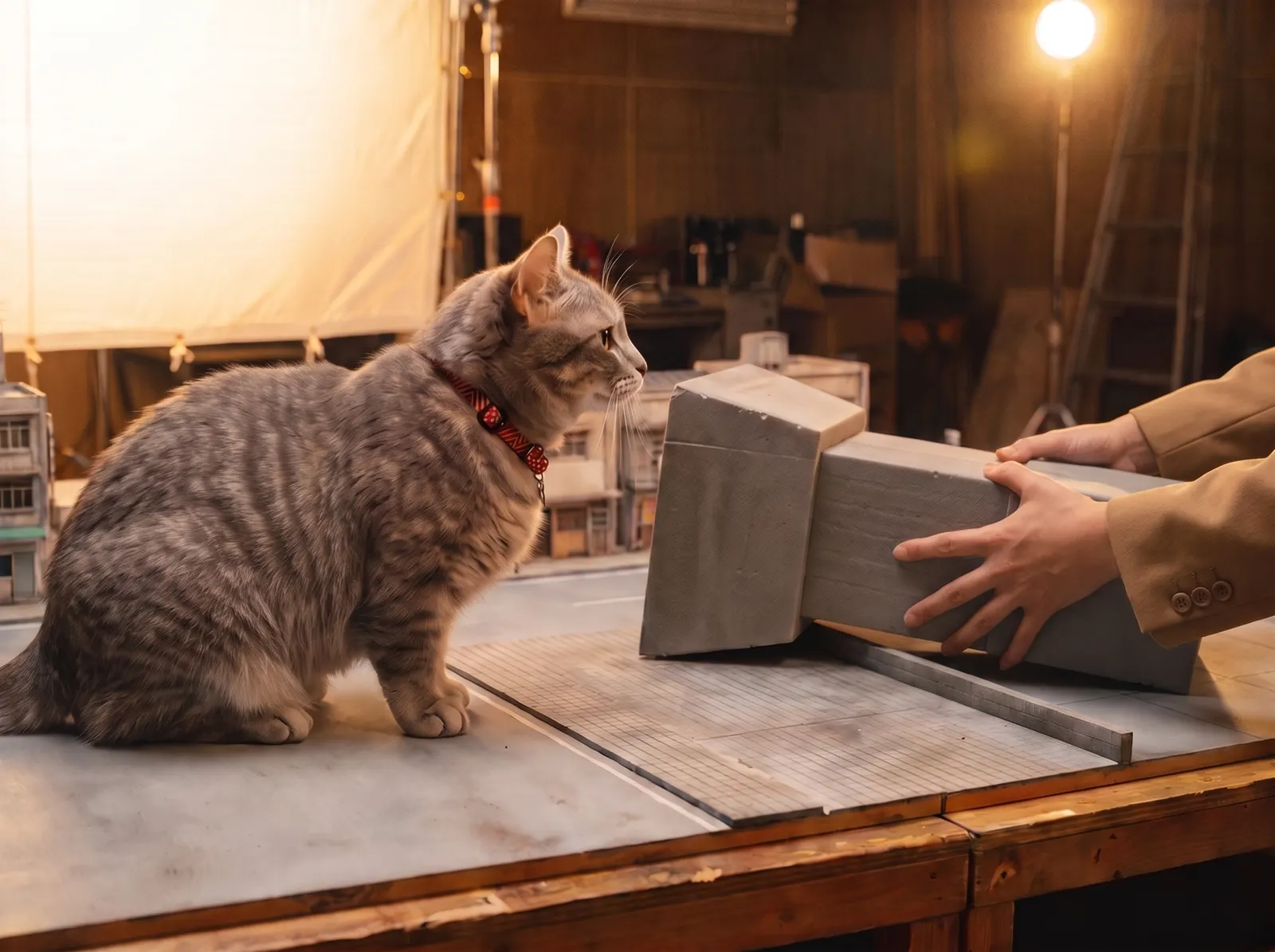
Behind the scenes, 撮影現場から (From the Set)
1970s documentary, with a crew bigger than the monster, four bloopers and an empty chair in the wrap photo.
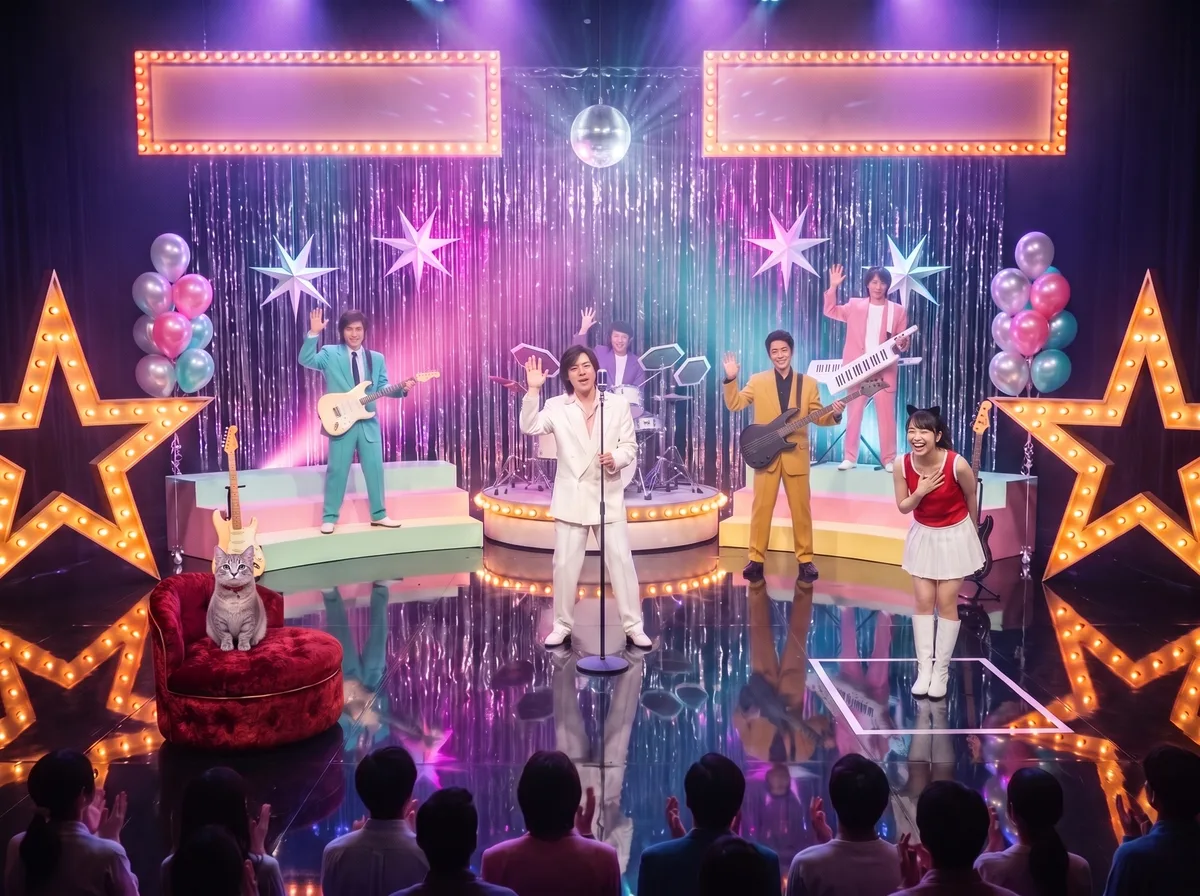
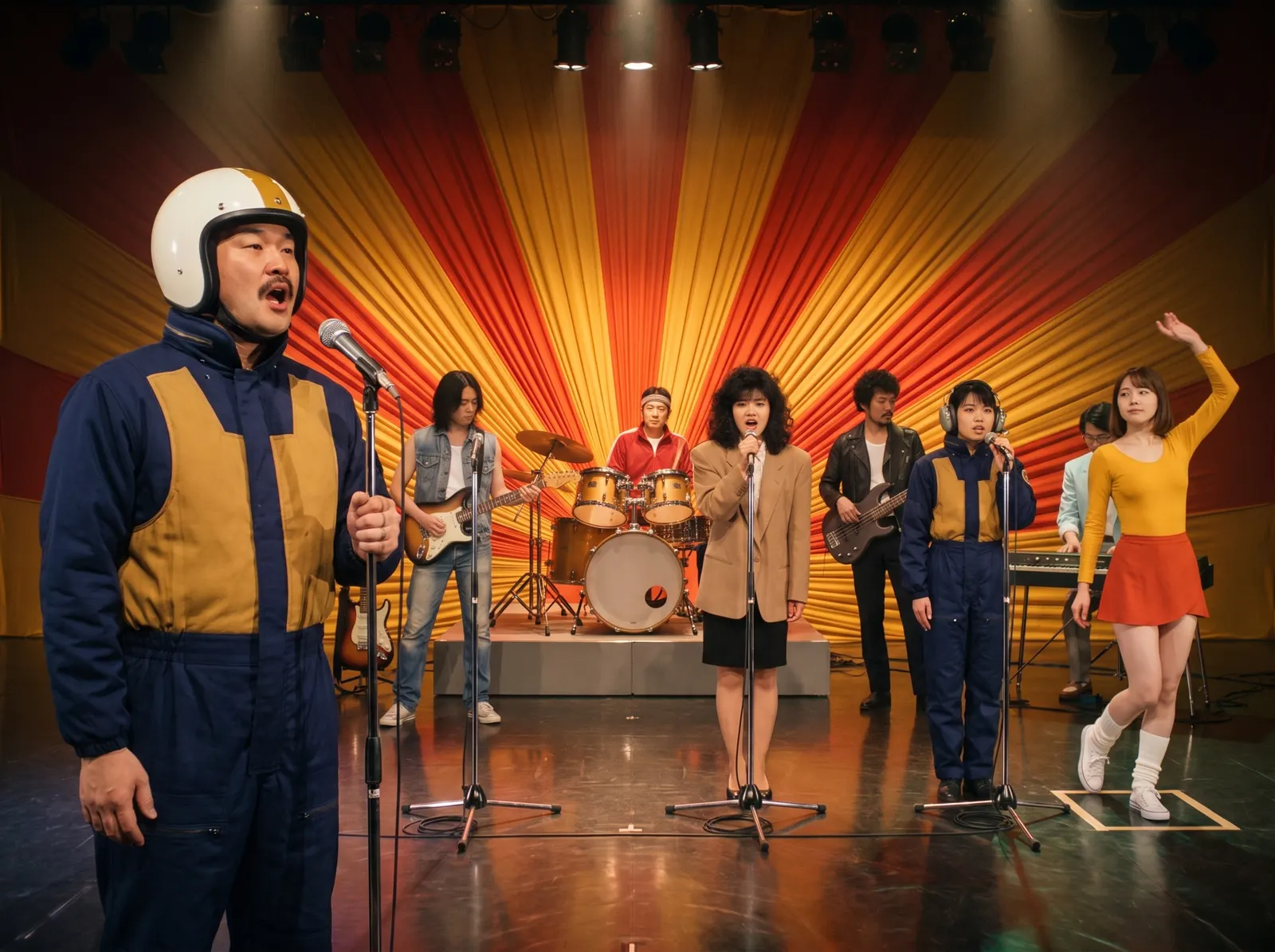
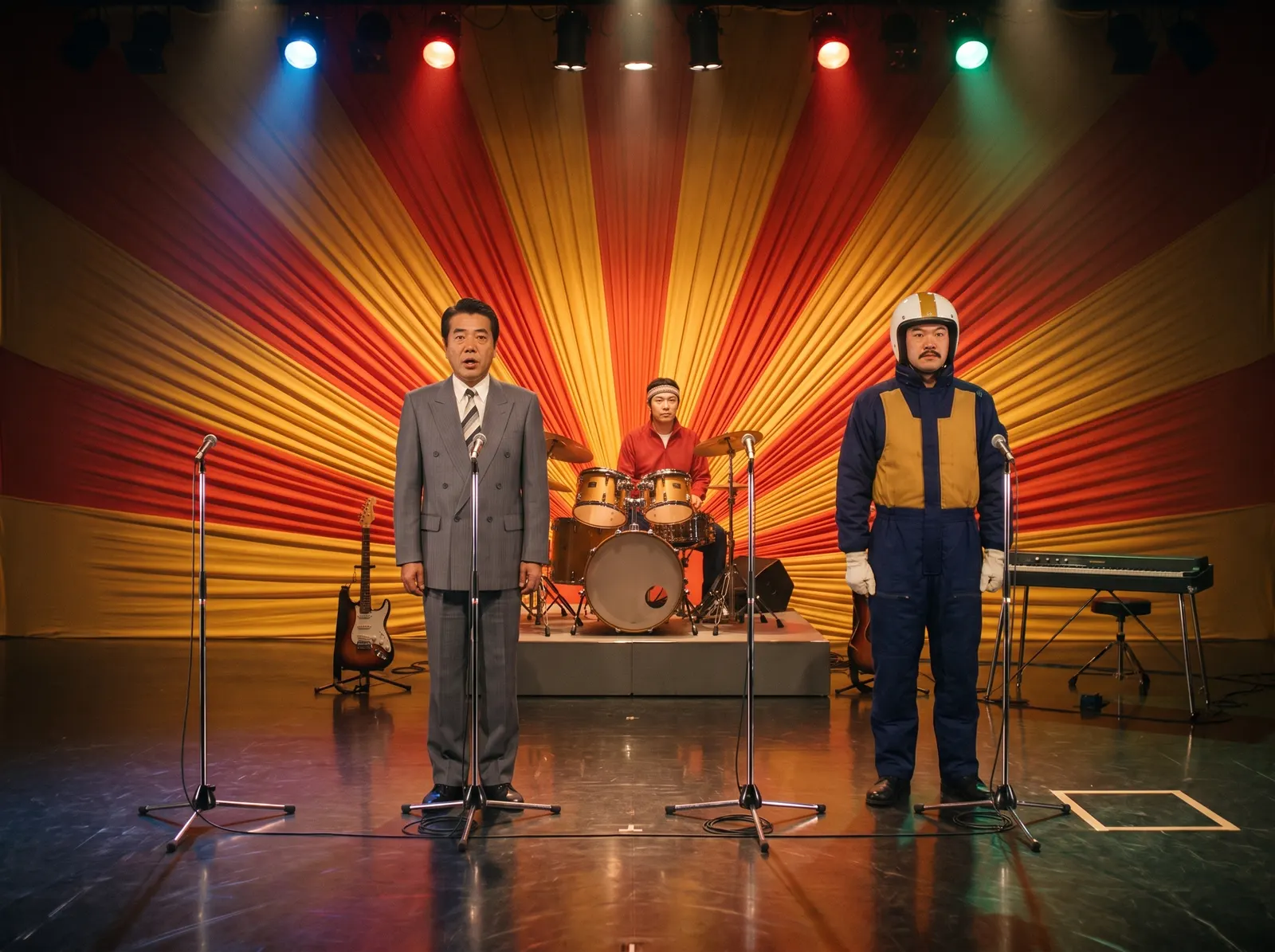
Stage performance, ザ・マンチカンズ「リクゴンのテーマ」 (The Munchkins, "Rikugon Theme")
a band in one color per member on a mirror-gloss floor, and a dancer doing the cat dance until the real cat does it better.
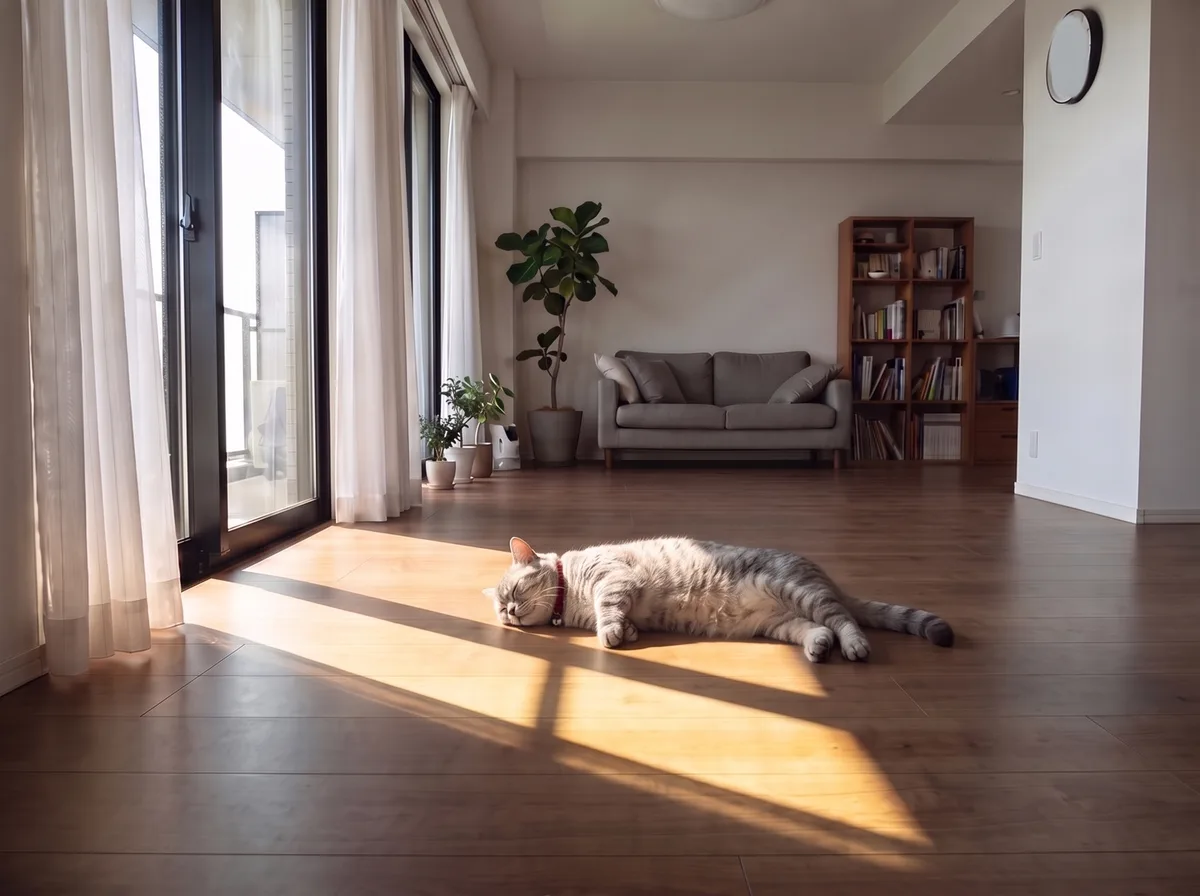
Enka single, 午後三時の女 (The Woman at Three in the Afternoon), sung by Riku
a karaoke-window music video where the afternoon sun patch is the brightest thing in every frame.
12 · Campaign
A promo cut from what already exists
The series promo is boarded as a trailer and short spots. Every frame on those boards carries a tag. Where footage exists, the board gives exact in and out points. A new shot gets requested only when nothing on disk will do.
Reuse keeps the look consistent as well as cheap.
13 · Timeline
A week of decisions, dated
These are the dated decisions in order, taken from my project notes. The last row rests on file dates instead of a note.
- 10 Oct 2026Look and cast lockedMood boards test four looks. I lock the cast as reference sheets: the kaiju, the news crew, the Defense Force, two robots and a crow.
- 10 Oct 2026Episode 1 approvedA cut of about 99 seconds becomes the reference cut for the season.
- 10 Oct 2026Studio creditThe series is credited "by NodeMode Studio".
- 11 Oct 2026Season boards and side storiesThe Episode 3 to 6 boards get game-style fights, and I approve the Episode 5 board. A campaign plan adds side stories in other TV formats.
- 11 Oct 2026Model splitSeedance 2.5 takes key shots. The faster 2.0 model takes supplemental shots, fight action included. The finisher stays on 2.5.
- 14 Oct 2026Working scripts selectedI choose the October 14 scripts as the story source for all new work, with Episodes 2 to 6 recut to 90 seconds or less.
- 15 Oct 2026Fight grammarEvery fight opens the same way. The picture drains to black and white for the opponent's name card, then FIGHT! slams in. A different real-cat move finishes each one.
- 16 Oct 2026Reset to five episodesI drop Episode 6 and start each re-edit from the original cuts. Episode 5 goes back to the miniature-film look.
- 17 Oct 2026First complete rendersBy file dates, complete renders of all five episodes exist. Episode 1, at about 2 minutes 12 seconds, is the newest.
14 · Result
A series built end to end in-house
Episode 1 is the template the other episodes are built from, and the series carries a "by NodeMode Studio" credit.
It also works as a test bed for the studio's method: locked references, board-first shooting and a scripted After Effects build with a hand edit on top.